Behind every successful fashion brand is a manufacturing system that really functions. For B2B customers, companies, and wholesalers, knowing the clothing production process helps prevent delays, quality problems, and unexpected expenses as it takes apparel from an idea on paper to finished products ready for sale, involving several stages that must be handled with care and precision. By keeping tight quality control, scaling output effectively, and satisfying industry standards and compliance demands, giving companies confidence, consistency, and peace of mind, a professional manufacturer is essential.
Overview of the Clothing Manufacturing Process
Starting a clothing line and beginning with a design concept and progressing through planning, sampling, production, and lastly distribution, the cloth making process begins. Every stage builds upon the one before it to ensure that clothing is prepared for mass manufacture without quality flaws.
While large-scale production emphasizes uniformity, velocity, and cost-effectiveness, small-batch manufacturing is best suited for testing designs and mitigating risk. Experienced B2B producers oversee this whole process of fabric making, coordinating materials, production schedules, and quality inspections so that brands can avoid mistakes, control expenses, and confidently scale as demand increases.
Step-by-Step Garment Manufacturing Process
Every step of the apparel production process must be deliberately designed and carried out before items are mass-produced. Understanding these stages enables B2B customers to anticipate where hazards might arise and how a trustworthy producer keeps everything on target. The following is a clear step-by-step description of how professional clothing manufacturers at scale transform ideas into uniform, high-quality clothes.
Design and Concept Development
Understanding the client’s brand identity, target market, and product objectives is the main priority in this phase. To turn concepts into practical designs, producers use drawings, reference images, and thorough technical packs. Trend analysis and feasibility studies guarantee the design can be made effectively, within budget, and without sacrificing quality, therefore enabling companies to bypass expensive redesigns later.
Fabric Selection and Sourcing
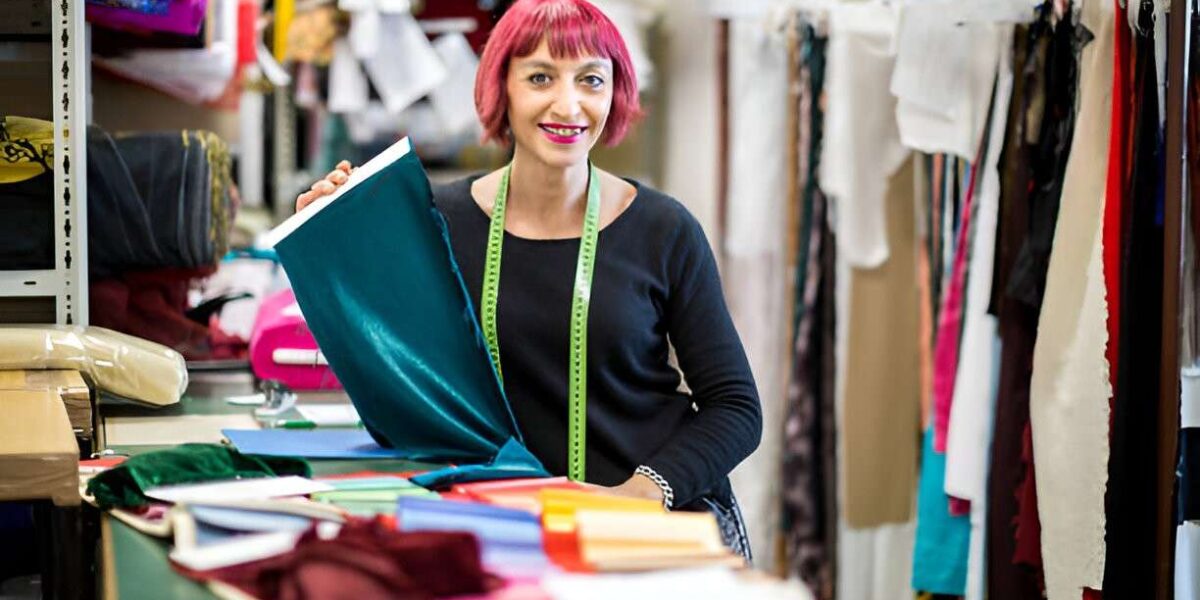
Selecting the correct material impacts comfort, longevity, and cost. Based on garment kind, application, and performance needs, manufacturers choose fabrics. While sustainability, certifications, and compliance standards are taken into account to satisfy brand values and market rules, reliable suppliers help to guarantee consistent quality.
Pattern Making
Patterns transform designs into production-ready templates. Cloth pattern design must be accurate to guarantee correct fit and size consistency, whether produced by hand or electronically. Good pattern creation guarantees every piece in mass production satisfies authorized specifications, lowers fabric waste, and enhances garment fit.
Sampling and Prototype Development
Before mass manufacture starts, samples let businesses examine fit, fabric behavior, and general appearance. Clothes are tested, altered, and authorized during this period. Early detection of problems via sampling saves time, lowers manufacturing risks, and avoids expensive mistakes throughout large-scale manufacture.
Fabric Cutting
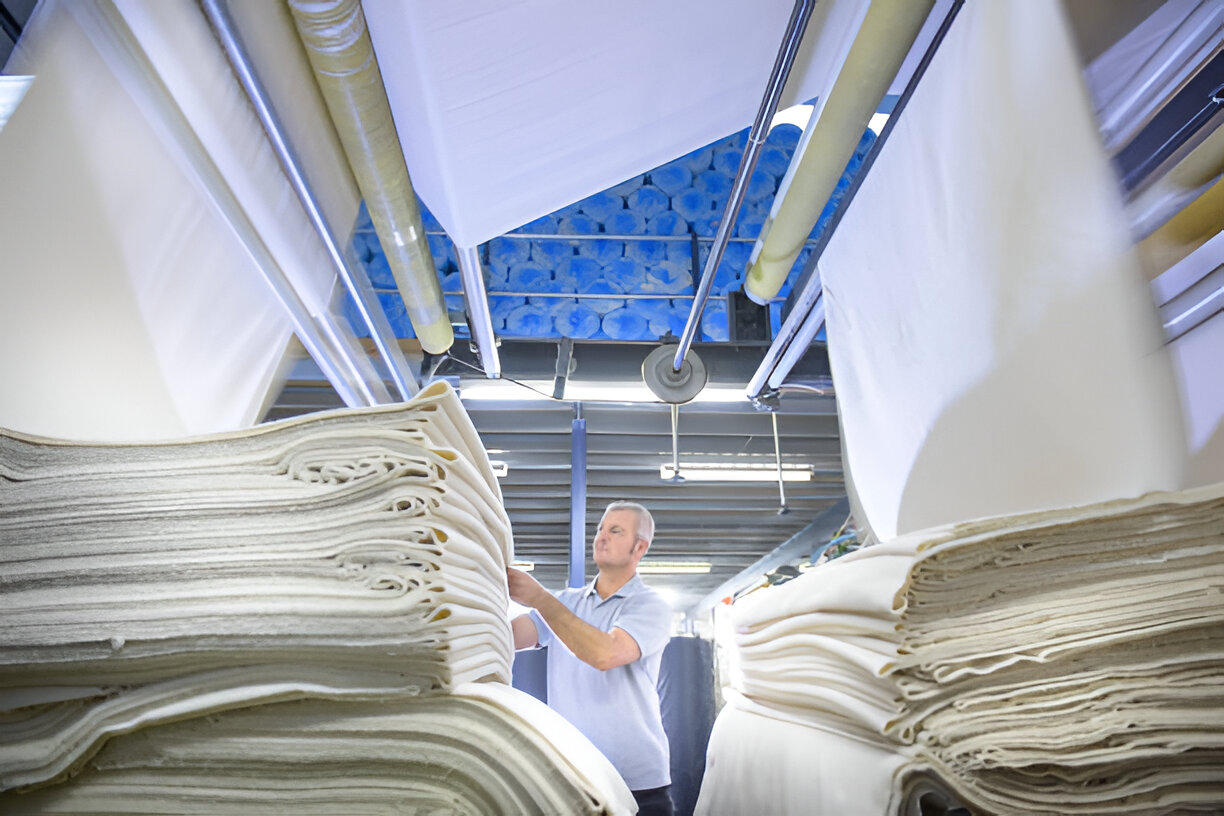
Cutting of cloth starts when samples are approved. Uniformity across large orders is guaranteed by precision cutting. For shorter runs, Clothing manufacturers could employ manual techniques; for greater efficiency, automated cutting machines can be utilized. Precise cutting keeps uniformity throughout production and helps to reduce material waste.
Sewing and Garment Assembly
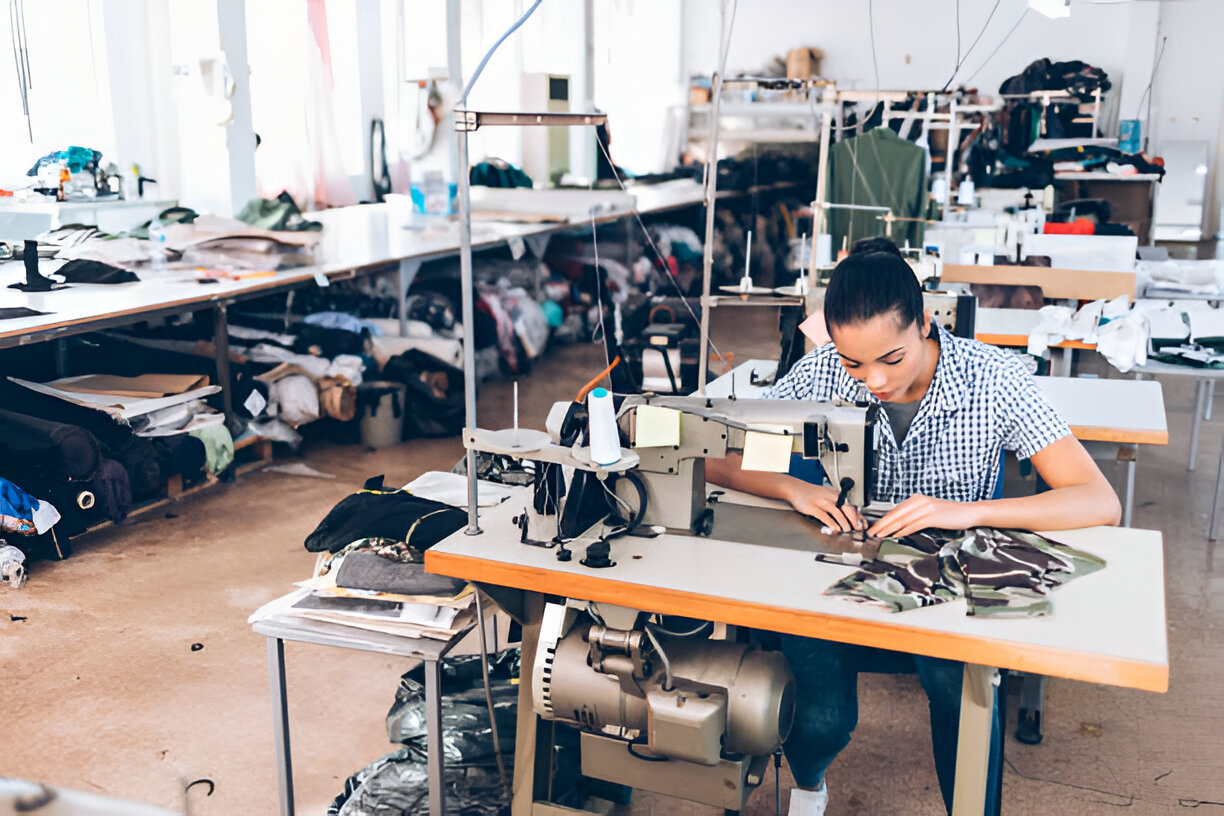
Cut pieces are joined with industrial machines and experienced operators at this level. To guarantee strength and durability, proper stitching methods and construction criteria are adhered to. Maintaining product dependability across big quantities depends on constant sewing quality.
Washing and Finishing
Shrink control, softness enhancement, or desired finish can all call for garment washing methods. Completing processes including ironing, steaming, trimming dangling threads, and pressing guarantees garments meet retail-ready requirements by enhancing wearability and appearance.
Quality Control and Inspection
During and after manufacturing of clothes, quality inspections take place. Garments are examined for sizing correctness, stitch imperfections, fabric faults, and performance problems. Good quality control lowers returns or customer discontent by guaranteeing consistency across mass production.
Labeling, Tagging, and Packaging
Approved items include brand labels, care labels, and size tags per customer needs. Wholesalers, retailers, or exporters have need-specific customizing options available for packaging. Good packing and labeling preserve brand image and streamline distribution.
Shipping and Logistics
The last process involves readying apparel for shipping. Manufacturers manage bulk logistics, compliance needs, and export papers. Good shipping management guarantees on-time delivery, hence enabling B2B customers to fulfill market deadlines and sustain fluid supply chains.
The Main Textile Production Processes
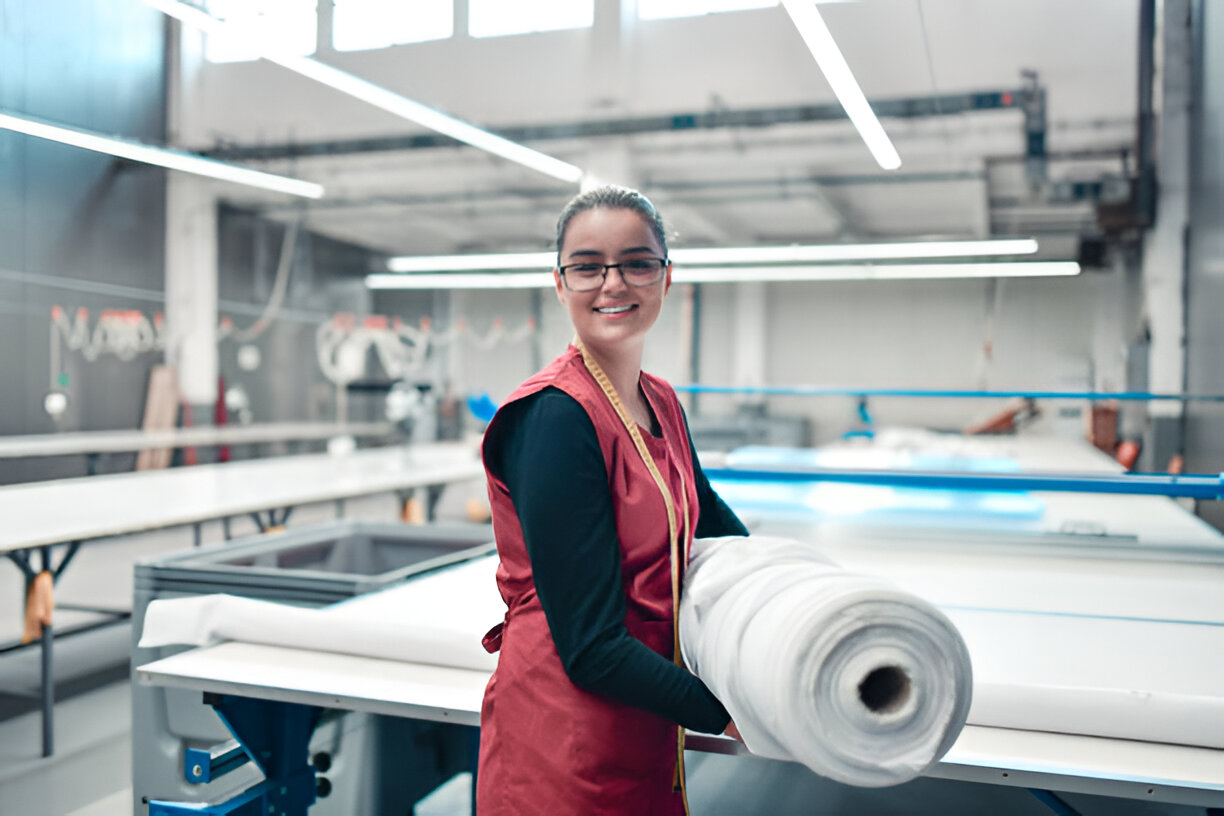
Every garment rests on fabrics; knowing how they are produced enables B2B customers to pick the best materials for quality, performance, and cost management. These essential textile techniques show how raw materials are converted into completed fabrics prior to their use in clothing production. Understanding these phases lets companies avoid fabric-related problems, keep consistency, and improve sourcing choices.
1. Fiber Production
Textile production starts with fiber generation. Natural fibers include cotton, wool, silk, and linen; synthetic ones include polyester, nylon, and acrylic. Though produced naturally, viscose, rayon, and modal, regenerated fibers undergo chemical treatment. Fibers are cleaned and readied for spinning at this point, hence guaranteeing they are fit for producing strong, even yarns.
2. Yarn Production (Spinning)
In yarn making, fibers are aligned, twisted, and spun into yarn. Carding and combing straighten fibers and get rid of pollutants, whereas spinning builds consistency and strength. The smoothness and longevity of the final fabric depend directly on the quality of the yarn. Yarns can be produced in several strengths and thicknesses depending on the expected use of the clothing.
3. Fabric Production
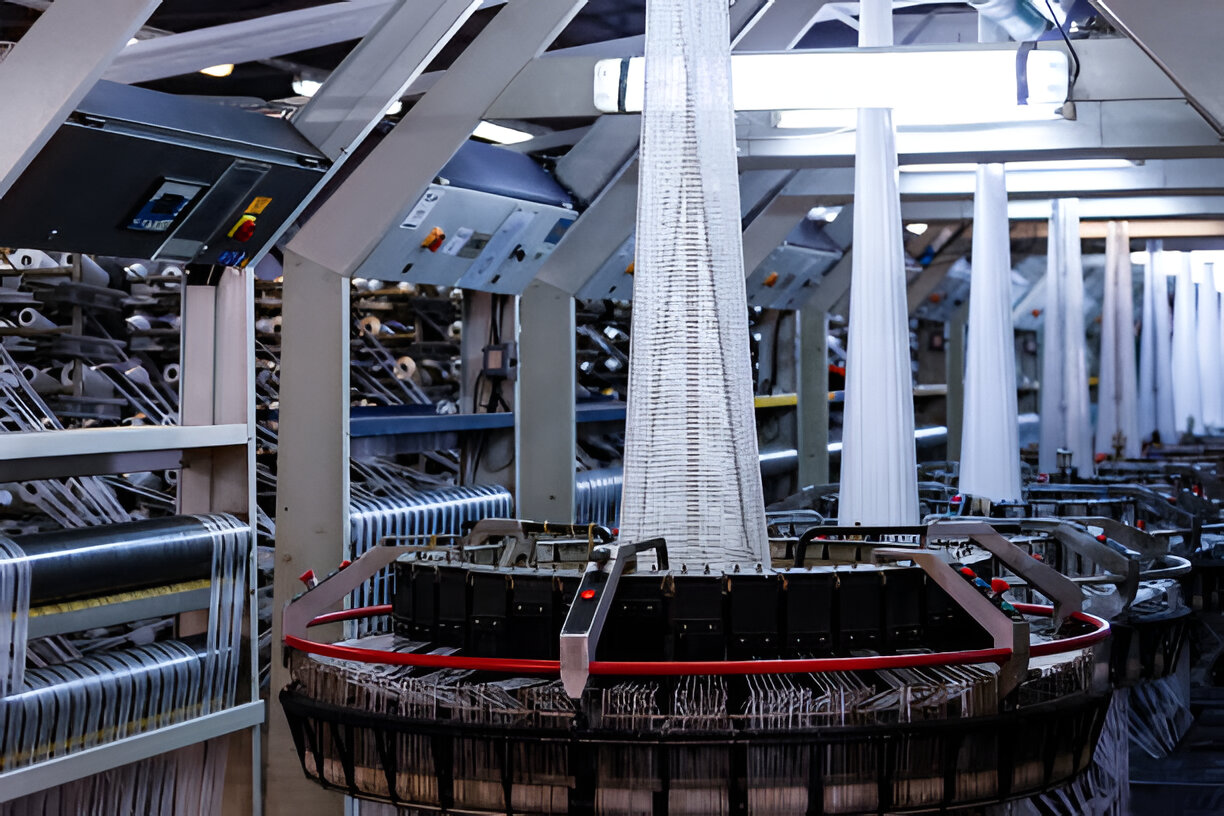
The fabric production process turns yarn into something that can be used. While knitting generates stretchable materials like jersey, weaving produces structured fabrics such as denim and twill. For technical or industrial fabrics, non-woven techniques are employed. The texture, stretch, breathability, and general performance of the finished clothing are decided by this stage.
4. Textile Finishing
Both beauty and function are improved with textile finishing. Dyeing, printing, and washing are wet finishing procedures; heat setting, calendering, and brushing are dry finishing techniques. These processes guarantee that textiles live up to performance and quality requirements by enhancing softness, colorfastness, strength, and utility.
Key Takeaways for Successful Garment Production
A well-ordered path from ideas into ready-to-sell, high-quality clothes, the apparel manufacturing process turns ideas into real-life products. Every step, from design development and fabric sourcing to sampling, bulk manufacture, quality control, and shipment, contributes significantly to guaranteeing uniformity and dependability. Knowing the fundamental textile methods enables B2B customers to choose materials wisely. Working with Tack apparel lets companies mitigate risks, manage expenses, smoothly increase clothes making, and boldly satisfy market demands.