Summary
Scaling clothing brand production from 50 to 5,000 units happens across three gates: proving the product at 50–500 units while accepting a higher unit cost, locking the pattern block and negotiating tiered pricing at 500–2,000, and moving to blanket orders with dedicated line time above 2,000. Staying with one manufacturer through all three protects fit consistency and compresses reorder lead time; resourcing at the exact moment demand spikes typically costs 3–6 months and risks the fit that earned your repeat customers in the first place.
The Growth Spike That Becomes a Crisis
Your second drop sells out faster than your first. You go back to the low-MOQ supplier who got you started, ask about 2,000 units for the next one, and hear one of two answers: they genuinely can’t scale that far, or they can, but you’re now behind two larger clients who booked the production line months before you asked.
So you start resourcing. Three to six months later, you have a new factory and a garment that fits almost the same as before. Your repeat customers notice immediately. Reviews start mentioning it. Reorders slow down at the exact moment you needed them to accelerate.
This is the least-discussed stage in building a clothing brand, and it’s also the most expensive one to get wrong. Nearly everything written about apparel manufacturing targets the launch moment, how to find a factory, how to negotiate your first MOQ, and how to get your first sample right. Almost nothing addresses what happens between your first successful drop and the volume where you’re actually a real business. That gap is exactly where the damage in this article’s opening scenario happens.
What Re-Sourcing at the Wrong Moment Actually Costs
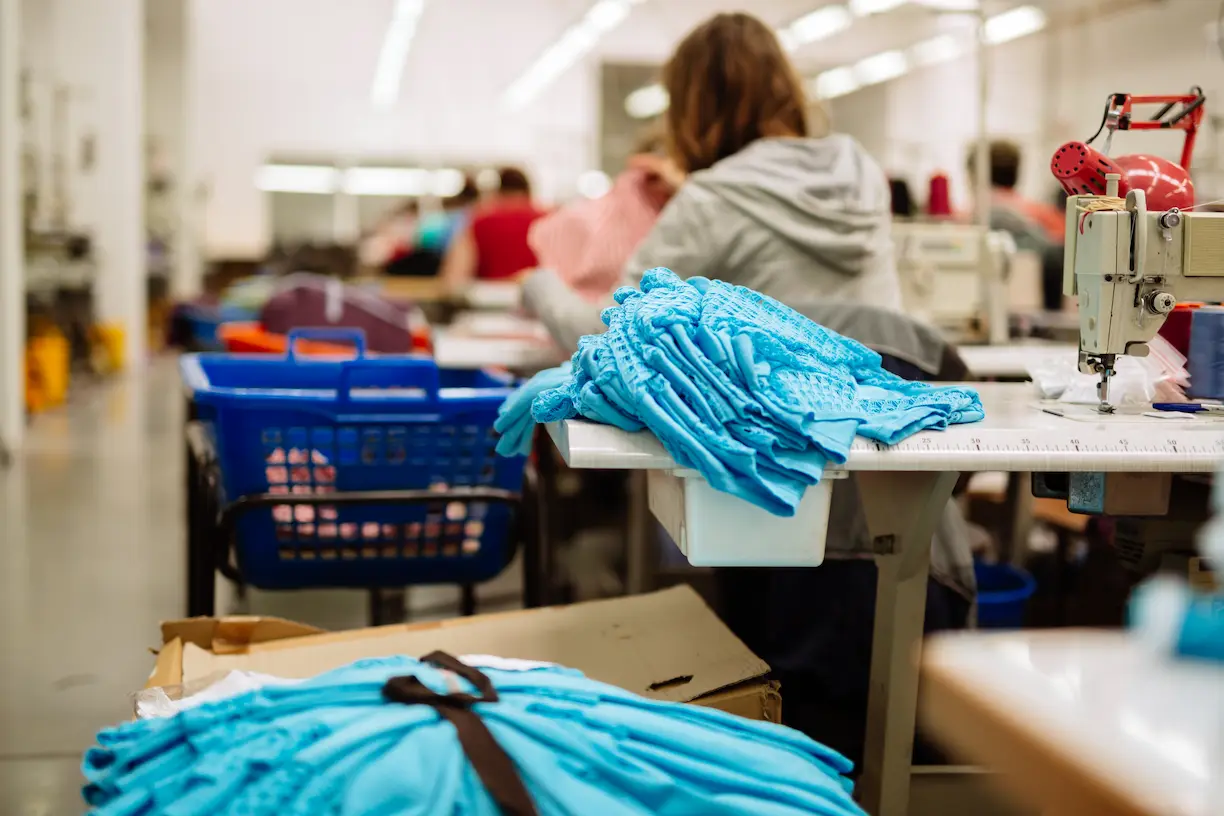
Before the three gates, it’s worth being specific about why switching factories mid-growth costs more than a simple unit-price comparison suggests.
Time you don’t have. A new factory relationship means new sample rounds, fit corrections, and a first production run built from scratch, realistically three to six months before you’re shipping at your new volume. That’s a full selling season lost at exactly the moment your demand curve pointed up.
Fit consistency you can’t fully transfer. Your pattern block, the master pattern your garment is built from, doesn’t move cleanly between factories. Different cutting equipment, operators, and interpretations of the same spec sheet produce a garment that measures correctly on paper and feels different on a body. Customers who loved your medium twice don’t email about the third one fitting differently; they just quietly stop reordering.
Institutional knowledge that isn’t written down. A factory that’s made your garment fifty times knows things no tech pack captures: how your fabric behaves after washing, which seam needs reinforcement, and where your fit tends to drift. None of that transfers with a pattern file.
Gate 1: 50–500 Units | Prove the Product, Protect the Reference
At this stage, the goal isn’t unit-cost efficiency. It’s learning whether the product actually works, cheaply enough to be wrong without real damage.
Accept the higher unit cost. At 50–500 units, you’re on the steepest part of the cost curve, and that’s the correct trade to make. The premium buys the ability to test before committing serious capital. A brand that jumps straight to 2,000 units on an unproven design to chase a lower price hasn’t saved money; it’s converted cash into inventory risk before demand was ever confirmed.
Keep the sealed sample. This is the single habit that protects everything downstream, and almost nobody does it by default. A sealed sample archive, a physically preserved, signed-off garment from your approved run, tagged and dated, is your reference point for every future production run and every fit dispute. Without it, “the fit changed” becomes an argument you can’t win, with your factory or with yourself.
Ask the forward-looking question now. What happens when I need 2,000 units? Get a real answer at Gate 1, not after you need one urgently.
Gate 2: 500–2,000 Units | Lock the Pattern, Earn the Tier

This is where a brand either builds a real foundation or quietly accumulates problems it’ll pay for later.
Lock the pattern block and grading rules. Your pattern block becomes a controlled document here, not something informally tweaked between runs. Your grading rules and the logic scaling your base size up and down across the size run need to be fixed and documented. Inconsistent grading is why a brand’s medium can stay perfect while the XL slowly drifts over successive orders, usually invisible until customers at the outer sizes start complaining.
Introduce inline QC. At 50 units, a final inspection catches most problems. At 1,500, a defect caught only at final inspection means 1,500 units of rework. Quality checks during production, not only at the end, become genuinely necessary here.
Negotiate tiered pricing with real leverage. You now have demonstrated repeat volume to bring to the table. Have an explicit conversation about economies of scale, the actual unit price at 1,000, at 2,000, at 5,000, so you know the curve you’re climbing instead of renegotiating blindly every order.
Start booking capacity. Capacity booking means reserving line time in advance. Brands deprioritized when a bigger client books the line are almost always brands that never booked capacity themselves. Ask what lead time your factory needs to guarantee a slot, then plan against that calendar.
Rationalize your SKUs. By Gate 2, most brands carry colorways and styles that don’t earn their complexity. SKU rationalization, deliberately cutting underperformers. concentrates volume into fewer variants, improving your pricing tier on what actually sells. Three colorways of a proven bestseller consistently outperform eight colorways of a mixed bag.
Gate 3: 2,000–5,000+ Units | Blanket Orders and Compressed Reorders
At this volume, the relationship shifts from transactional to structural.
Move to blanket orders. A blanket order commits to a total volume across multiple future deliveries, 6,000 units over three drops, for instance, rather than negotiating each run independently. The factory gets planning certainty; you get better pricing than any single order would earn, with delivery timed to actual sell-through instead of one large inventory position.
Get fabric held on your behalf. At this scale, a factory can reserve or pre-purchase fabric against your committed volume, eliminating the biggest driver of reorder delay, waiting on a mill’s dye and production schedule, and protecting against a shortage killing a restock at the worst moment.
Consider vendor-managed inventory. At the top of this range, some manufacturer relationships evolve into vendor-managed inventory (VMI) arrangements, where the factory monitors your sell-through data directly and proactively triggers replenishment before you’d think to place a reorder. This isn’t standard at Gate 2 volumes, but it’s worth knowing as the natural endpoint of a mature manufacturing relationship.
Compress your reorder lead time. With fabric held, patterns locked, and dedicated line time secured, reorder lead time on a proven style drops meaningfully, changing your entire inventory strategy. Faster reorders mean carrying less safety stock, the buffer inventory held to cover demand spikes, freeing cash that would otherwise sit parked in a warehouse.
What Actually Drives the Cost Curve Down
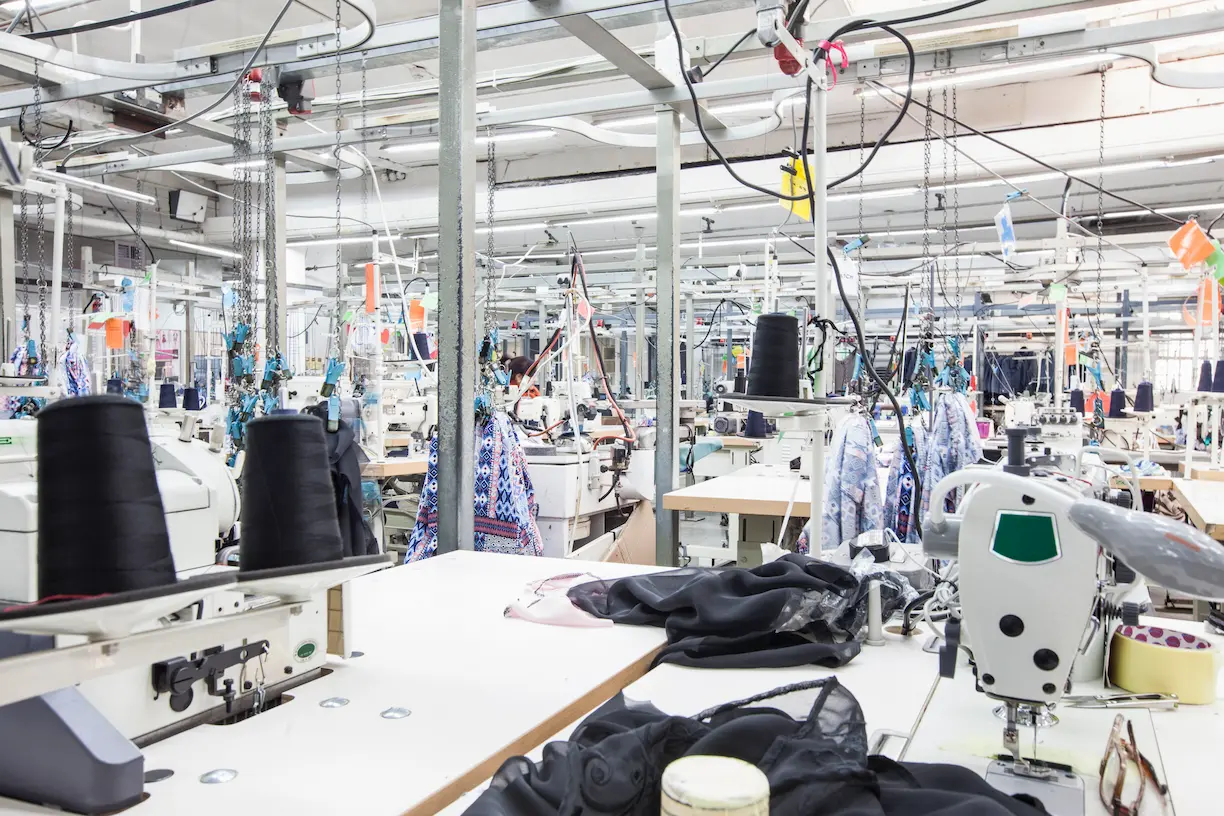
Here’s an indicative shape of the unit-cost curve, and, more usefully, what specifically causes each drop:
| Order Volume | Indicative Unit Cost | What’s Actually Driving It |
| 50–200 units | Highest tier | Fabric buying power is minimal; setup costs are spread across very few units. |
| 500 units | ~10–15% lower | Better fabric buying power; marker efficiency improves slightly. |
| 2,000 units | ~20–30% lower | Full fabric roll utilization, single dye lot, stronger marker efficiency reducing waste |
| 5,000+ units | ~30–40% lower | Blanket order pricing, held fabric, near-optimal marker efficiency, setup amortization across the full run |
Three specific mechanisms are doing the actual work here: fabric buying power (larger orders access better raw material pricing), marker efficiency (the CAD layout that nests pattern pieces onto fabric wastes less material at higher, more flexible volumes), and set-up amortization (fixed labor costs spread across more units). Understanding which mechanism you’re unlocking at each tier is what lets you negotiate specifically, instead of just asking for a vague discount and hoping.
The curve also flattens noticeably: the steepest savings land between 50 and 2,000 units. Past that, gains continue but shrink, which means chasing volume purely for unit price beyond 5,000 units rarely justifies the added inventory risk for a still-growing brand.
Fit Consistency Is a Retention Metric, Not a Manufacturing Detail
Most founders think about their manufacturer as a cost center. At the scaling stage, it’s more accurate to think of them as a retention asset.
Your repeat customers bought your garment because it fit them specifically. That fit is the product. When it drifts, a factory changes, ungraded rules are never formally locked, and a new operator interprets an ambiguous spec differently, you haven’t shipped a slightly different garment. You’ve quietly broken the exact thing that earned the repeat purchase.
This is why staying with one manufacturer through all three gates isn’t loyalty for its own sake. It’s the cheapest insurance available on revenue you’ve already earned. A factory holding your sealed sample, controlling your locked pattern block, and having made your garment fifty times is protecting an asset that never appears on your balance sheet but shows up directly in your reorder rate.
If your growth plan runs through cut-and-sew manufacturers capable of scaling with you rather than capping out at a few hundred units, that continuity is the real differentiator worth asking about, more than the headline unit price at any single tier. The same logic holds if part of your growth involves private label products alongside your own line: fit-consistency math doesn’t change based on whose name is on the label.
Plan the Scaling Conversation Before You Need It

The brands that scale smoothly aren’t the ones who found a cheaper factory at the right moment. They’re the ones who asked “what happens at 2,000 units?” during their very first sourcing call and chose a partner with a real answer instead of a vague reassurance.
Keep the sealed sample from your first run. Lock your pattern block and grading rules before a size complaint forces the issue. Book capacity earlier than feels necessary. Treat your manufacturer relationship as infrastructure, not a line item to reshop the moment a competitor undercuts on price.
Want a production partner built for supporting startups and scale-ups at every stage, not just the first one? Talk to Tack Apparel about scaling past your first 50 units.
Frequently Asked Questions
How do I scale up my clothing production?
Scale through three gates: prove the product at 50–500 units while accepting a higher unit cost, lock your pattern block and grading rules while negotiating tiered pricing at 500–2,000 units, then move to blanket orders with held fabric and dedicated line time above 2,000 units. Staying with one manufacturer across all three preserves fit consistency and shortens reorder lead time.
Does unit cost drop with larger clothing orders?
Yes, driven by three specific mechanisms: improved fabric buying power at volume, better marker efficiency (less fabric wasted in cutting layouts), and setup costs amortized across more units. The steepest savings typically occur between 50 and 2,000 units, with gains flattening above 5,000.
Will my garment fit change if I switch manufacturers?
Very likely, even subtly. Pattern blocks don’t transfer cleanly between factories; different cutting equipment, operators, and fabric handling produce a garment that can measure correctly on paper while feeling different on a body. This is the most common and most damaging cost of re-sourcing during a growth spike, because it affects the exact repeat customers driving that growth.
How far ahead should I book factory capacity?
It varies by manufacturer and season, but the practical approach is to ask directly what lead time your factory needs to guarantee a production slot, then plan your launch calendar backward from that answer with a buffer. Brands deprioritized when larger clients book the line are usually brands that never formally booked capacity themselves.
What is a blanket order in apparel manufacturing?
A blanket order is a single agreement committing to a total production volume across multiple future deliveries, for example, 6,000 units delivered across three drops, rather than negotiating each run separately. It earns better pricing than individual orders while letting you take delivery in batches matched to actual sell-through.