Sweaters are one of fashion’s greatest success stories, they have endured for centuries, survived every trend cycle, and continue to reinvent themselves season after season. Whether you reach for one because of a bitter cold or simply because it completes an outfit, there’s a sweater style out there perfectly matched to your needs. But how many types of sweaters are there, really? The answer might surprise you. When you factor in all the different silhouettes, necklines, knitting techniques, fabrics, and intended uses, the number easily stretches past 50 distinct styles. This guide walks you through all of them, from enduring classics to the looks defining runways in 2025 and 2026, so you can build a smarter, more versatile wardrobe.
Think of this as your complete, no-fluff reference for different types of sweaters: what they are, how to wear them, which fabrics work best for each, and which styles belong in your closet right now. Let’s start from the beginning.
What Is a Sweater?
A sweater is a knitted or crocheted upper-body garment designed primarily to provide warmth. Unlike woven clothing like dress shirts or jackets, a sweater is made by interlocking loops of yarn, a technique that creates a naturally elastic, breathable fabric with excellent insulating properties. Sweaters can be made from a wide range of materials, including wool, cashmere, cotton, fleece, acrylic, and blended fibres, and they come in a dizzying variety of shapes, patterns, weights, and neckline styles.
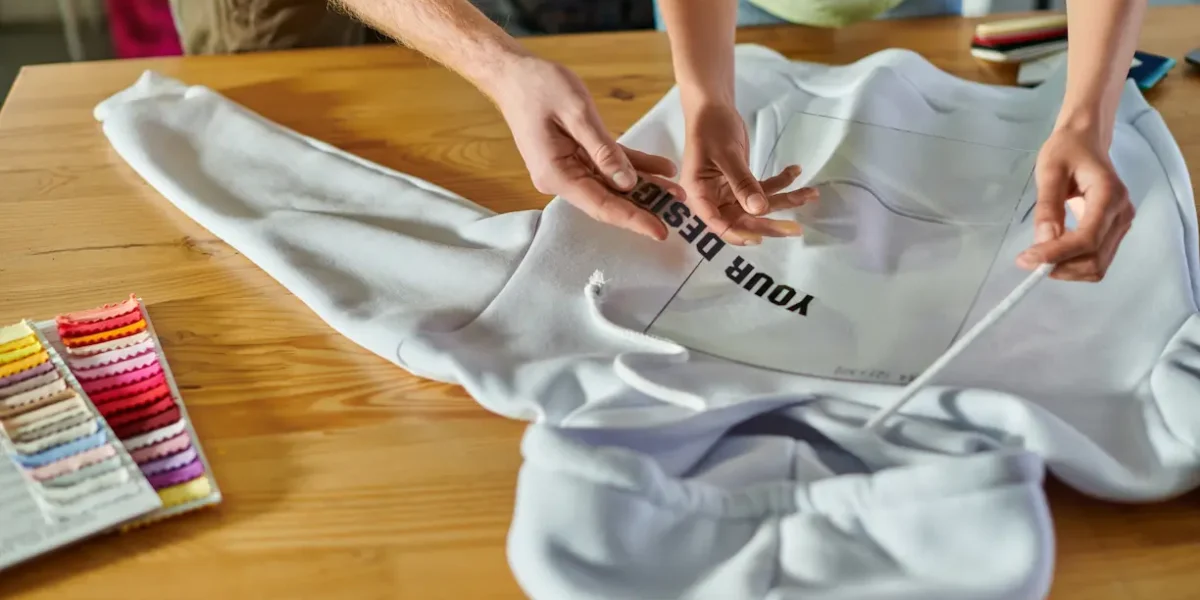
It’s worth clarifying a common point of confusion: sweaters and sweatshirts are not the same thing. Sweatshirts are sewn from a woven or knitted fabric (typically fleece-backed cotton) and are manufactured similarly to sportswear. Sweaters, by contrast, are knit or crocheted, which makes them softer and more structured. While sweatshirts lean athletic and casual, sweaters span the entire style spectrum, from rugged outdoorwear to polished boardroom-ready layers.
How Sweaters Are Categorized
Before diving into individual styles, it helps to understand that sweaters are typically classified in four overlapping ways: by silhouette (how they’re shaped, pullover vs. open-front), by neckline (crew, V-neck, turtleneck, etc.), by knit type (cable, ribbed, Fair Isle, etc.), and by fabric. Most sweaters belong to multiple categories simultaneously, for example, a cable-knit turtleneck pullover in merino wool. Understanding these axes makes it easy to talk precisely about what you own and what you need.
Types of Sweaters by Silhouette
1. Pullover Sweater
The pullover is the most fundamental sweater form: a closed garment with openings only for the head and arms. You pull it over your head, hence the name. Pullovers come in every possible neckline, weight, and knit, making them the backbone of almost every wardrobe. Because of their streamlined construction, they layer cleanly under jackets and coats and tend to look more polished than open-front options. When most people picture a classic sweater, this is what they’re imagining.
2. Cardigan
The cardigan is an open-front sweater, typically fastened with buttons, a zipper, or left entirely open. Named after the 7th Earl of Cardigan (who reportedly wore one during the Crimean War), cardigans are one of the most versatile garments in existence, both for men and women. They work equally well as a top layer or as a mid-layer under a coat, and they can dress up or down effortlessly. As one of the most popular types of cardigan sweaters, the classic button-front cardigan features long sleeves, ribbed cuffs, and a clean hem. It can be found in materials ranging from budget-friendly cotton to investment-grade cashmere.
Cardigans for women run the gamut from cropped to longline, from structured to flowy, and from minimal to heavily embellished. Men’s cardigans tend toward cleaner silhouettes in earthy, neutral tones, charcoal, navy, oatmeal, camel, and often carry a quiet, intellectual charm. In 2025 and 2026, cardigans are having a significant resurgence: styled open with statement belts, layered over crisp white tees, or even worn as a standalone piece with nothing underneath.
3. Sweater Vest
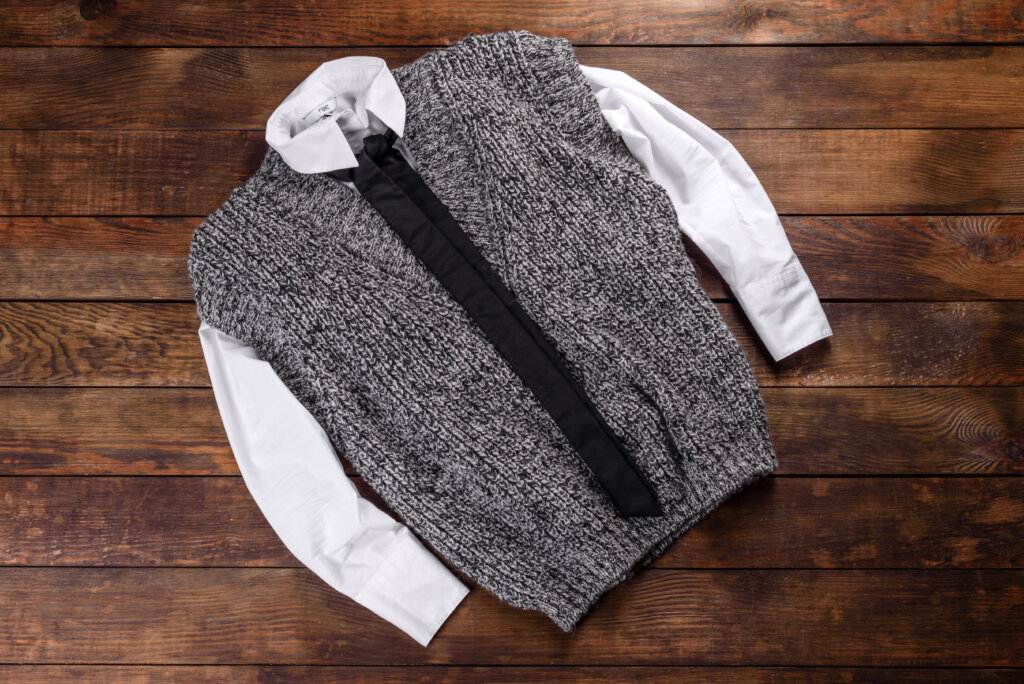
The sweater vest, also called a slipover or tank-top sweater, is a sleeveless version of the pullover that has gone through multiple fashion rebirths. In the mid-2020s, it’s firmly back in style for both men and women. For guys, a sweater vest over a collared shirt is a preppy, put-together look that works in business-casual environments. For women, sweater vests are being styled over long-sleeve shirts, turtlenecks, or even directly on the skin for an effortlessly cool, layered aesthetic. Among types of knit sweaters, the vest is one of the most practical, adding warmth at the core without restricting arm movement.
4. Sweater Dress
A sweater dress merges the cosy knit warmth of a sweater with the femininity of a dress. These dresses come in lengths from mini to midi to maxi, and they’re constructed from the same knit fabrics you’d find in any other sweater. They’re typically worn with tights or leggings during colder months and can be belted to define the waist or left loose for a relaxed silhouette. On the Fall/Winter 2025–2026 runway, Chanel notably revisited the chunky sweater-dress, cementing its status as a season must-have.
5. Poncho
A poncho is a single piece of fabric, usually wool or a wool blend, with an opening for the head, worn so that it drapes over the shoulders and falls loosely over the body. Technically a pullover, it lacks shaped sleeves entirely, giving it a free-flowing, bohemian character. Ponchos are genuinely useful in autumn and early winter, functioning as a stylish outerwear layer. They’re particularly popular with women who want something more interesting than a standard coat but warmer than a light cardigan.
6. Cape Sweater
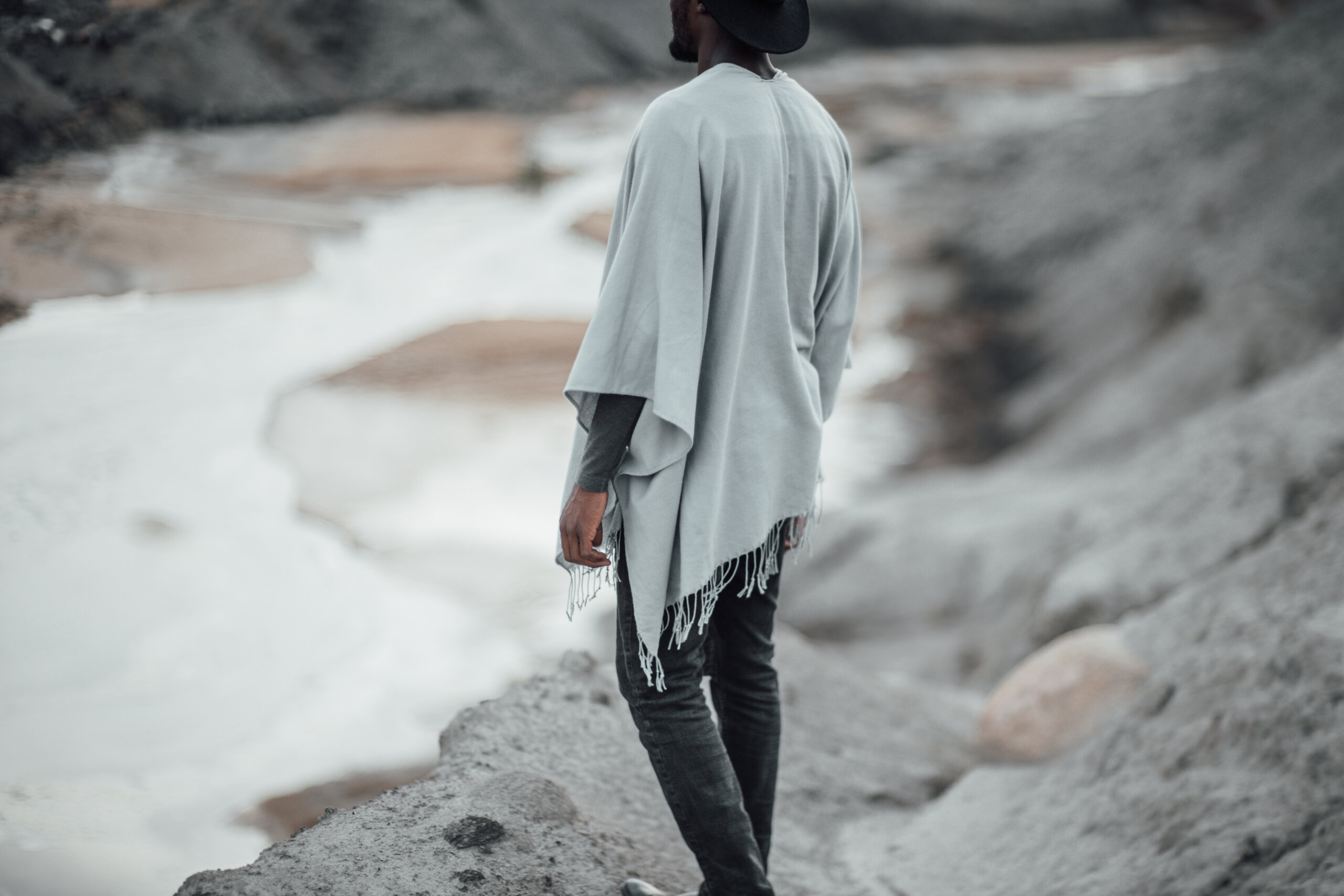
Similar to a poncho but with a more structured, coat-like design, the cape sweater drapes over the shoulders like a cloak and typically hits at the hip or mid-thigh. Like ponchos, they’re meant to be worn as layers rather than standalone pieces, and they’re best constructed in wool for adequate warmth. The cape silhouette has a notably vintage, elegant quality that appeals to dressier occasions without sacrificing the casual comfort of knitwear.
7. Tunic Sweater
Tunic sweaters are defined by their longer hem, typically falling below the hips, sometimes reaching mid-thigh. The longer length creates a graceful, covered silhouette that’s particularly flattering when paired with leggings or skinny jeans. Tunic sweaters are a reliable everyday piece: comfortable enough for a lazy weekend, polished enough for casual Fridays.
8. Oversized Sweater
The oversized sweater is a perennial trend that continues to evolve. In 2025 and 2026, the silhouette has shifted from simply ‘too big’ toward a more intentional drop-shoulder, extra-long-sleeve aesthetic in chunky yarns with textured stitches. The key difference between a true oversized sweater and just wearing a size up is proportionality, intentional volume, thoughtful details. Fashion experts recommend pairing oversized knits with more fitted bottoms (slim jeans, leggings, tailored trousers) to keep the look balanced rather than shapeless.
9. Boyfriend Sweater

The boyfriend sweater is a specific iteration of the oversized concept, with a decidedly relaxed, casual energy, as if you borrowed it from someone’s wardrobe. Typically knit in soft cotton or wool blends, boyfriend sweaters have become one of the most searched types of womens sweaters in recent years, driven heavily by social media. They look particularly good with rolled-up sleeves, skinny jeans or leggings, and ankle boots for a look that’s equal parts cosy and cool.
10. Hoodie Sweater
The hooded sweater is a sweater-weight garment with an attached hood, usually in heavier, non-fleece knit fabrics. Unlike a standard sweatshirt hoodie made of fleece, a hoodie sweater may incorporate cable knit patterns, cashmere blends, or structured ribbing. Some zip up the front, others are pulled over the head. They often feature front pockets and adjustable drawstrings. Think of it as the outdoorsy cousin of the cardigan, functional without sacrificing texture and warmth.
11. Sweater Jacket
Also called a cardigan jacket or knit jacket, the sweater jacket combines the cosy feel of knitwear with the structural silhouette of an outerwear piece. These can come fitted and blazer-like for a polished office look, or unstructured and cosy for casual layering. Because of their weight and construction, they can replace a light jacket in mild weather. They’re among the most versatile pieces in both men’s and women’s knitwear, equally at home at a dinner out or a weekend market.
Types of Sweaters by Neckline: The Necks and Collars on Sweaters
The neckline is one of the most defining features of any sweater. The different types of necklines for sweaters significantly affect how a garment looks, how it layers, and how formal or casual it reads. Here’s a thorough breakdown of all major types of necks on sweaters:
12. Crew Neck Sweater
The crew neck is the classic rounded neckline, close to the base of the neck with a neat ribbed band. It’s clean, versatile, and timeless. A crewneck sweater works in virtually any casual or smart-casual setting. For men, it’s especially easy to layer under a sports coat or over a button-down. For women, it pairs beautifully with dresses, midi skirts, or high-waisted trousers. The crewneck is perhaps the most universally flattering of all types of collars on sweaters, sitting well on virtually every body type.
In Fall/Winter 2025–2026, the crewneck has been championed by major American actresses and fashion houses alike, Miu Miu featured it prominently, pairing it with understated dark grey trims for a look of ‘quiet femininity.’
13. V-Neck Sweater
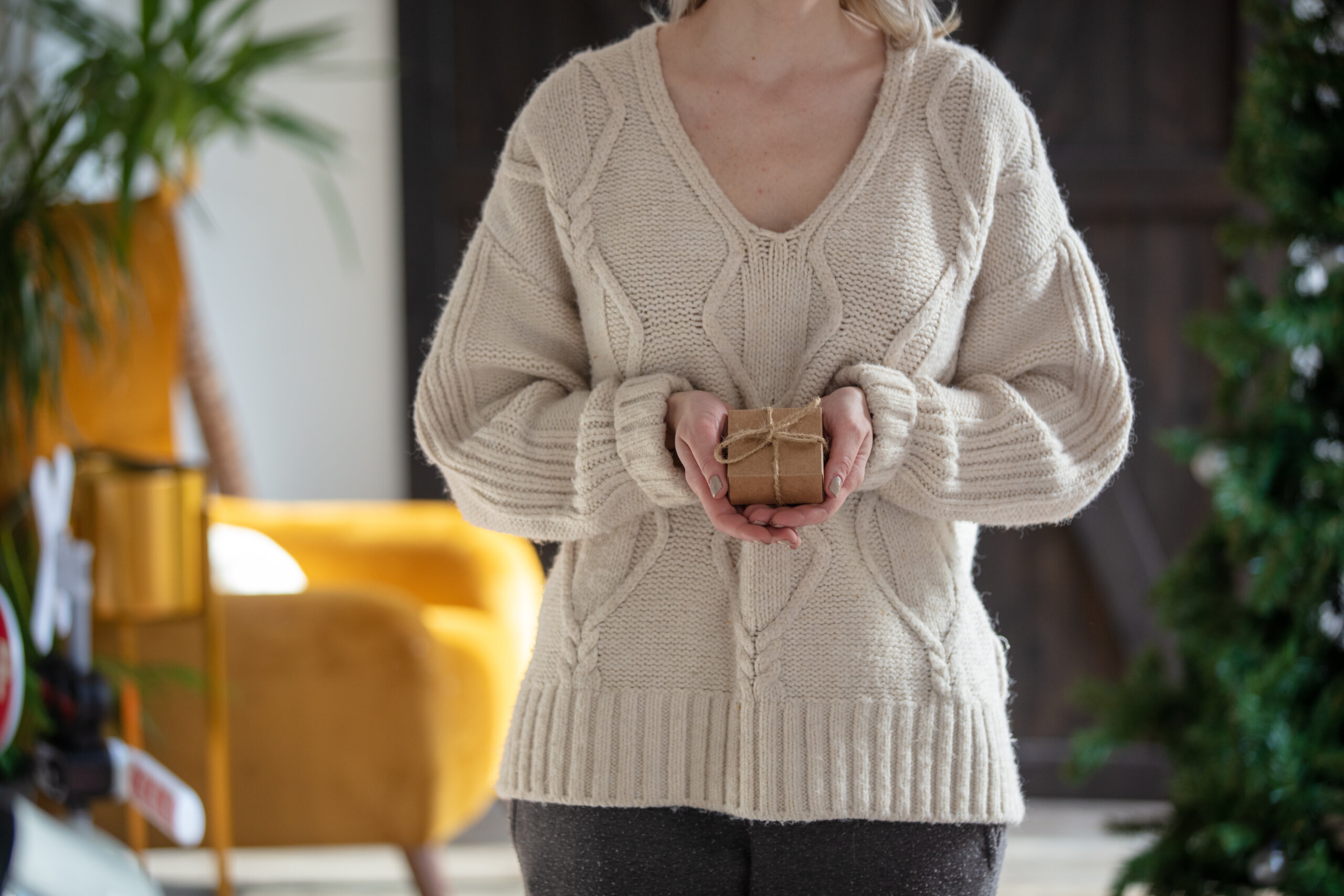
The V-neck does what the crew neck cannot: it opens up the chest, elongates the neck, and creates a natural space for a collar or tie to show through. This makes it the go-to choice for semi-formal and business-casual settings, where it can be layered over a collared shirt or blouse with ease. V-neck sweaters are among the most popular types of sweaters for men precisely because of this versatility. High-V neck versions have also made a strong comeback in 2025, offering a more modern, slightly more dramatic silhouette than the traditional shallow V.
14. Turtleneck Sweater
The turtleneck, sometimes called a polo neck, features a high, close-fitting collar that folds over on itself and covers most of the neck. It’s one of the most recognizable types of turtleneck sweaters, and for good reason: it’s supremely warm, architecturally striking, and has a rich history in both intellectual fashion and high couture. Hermès, Gabriela Hearst, and Marni all placed turtlenecks front and center at the Fall/Winter 2025–2026 runway shows, confirming that the turtleneck is officially back at the top of the trend pyramid.
For men, a turtleneck in fine merino wool or cashmere reads as sophisticated and quietly confident. Women’s turtlenecks come in everything from body-skimming ribbed cotton to luxuriously chunky cable knits. The turtleneck is widely considered the single best sweater style for extreme cold, it protects the neck (where significant body heat is lost), layers easily under coats, and looks effortlessly put-together.
15. Mock Turtleneck (Mock Neck) Sweater
The mock neck is a turtleneck’s sleeker sibling: a collar that stands up around the neck but doesn’t fold over, sitting about 2–3 inches high. It delivers most of the warmth and style of a full turtleneck without the bulk of the fold. Mock neck sweaters are extremely popular in 2025 styling, they’ve been spotted on the streets of Paris Fashion Week and featured in half-zip and zip-up cardigan versions at brands like Skims and From Future. They’re ideal for people who love the neck coverage of a turtleneck but prefer a cleaner, less dramatic silhouette.
16. Roll Neck Sweater
Closely related to the turtleneck, the roll neck features a looser, chunkier collar that naturally rolls back on itself rather than folding neatly. Where the turtleneck is sleek, the roll neck is relaxed and rugged, it has that classic fisherman’s aesthetic that has been trending in 2025 as part of the broader ‘coastal heritage’ dressing movement. The roll neck suits heavier, textured yarns like Aran wool, Shetland, or chunky merino particularly well.
17. Cowl Neck Sweater

The cowl neck sweater features a wide, draped collar that falls loosely around the neck like a soft hood, it’s elegant without being fussy. The drape creates a beautiful shadow and framing effect that suits dressier occasions. Cowl necks look best in heavy, drapey fabrics like cashmere or a fine wool blend that will hold the fold gracefully. They can read formal or casual depending on the rest of the outfit, with tailored trousers and heels they’re evening-ready; with jeans and boots they’re effortlessly weekend-appropriate.
18. Funnel Neck Sweater

The funnel neck falls between a crew neck and a turtleneck, it stands up straight without folding over, creating a chimney-like opening that frames the lower face. Funnel necks are practical and stylish, ideal for shoulder-season wear when you don’t need the full coverage of a turtleneck but want more protection than a crew neck provides. They pair naturally with slim jeans or tailored trousers for a clean, modern look.
19. Boat Neck (Bateau Neck) Sweater
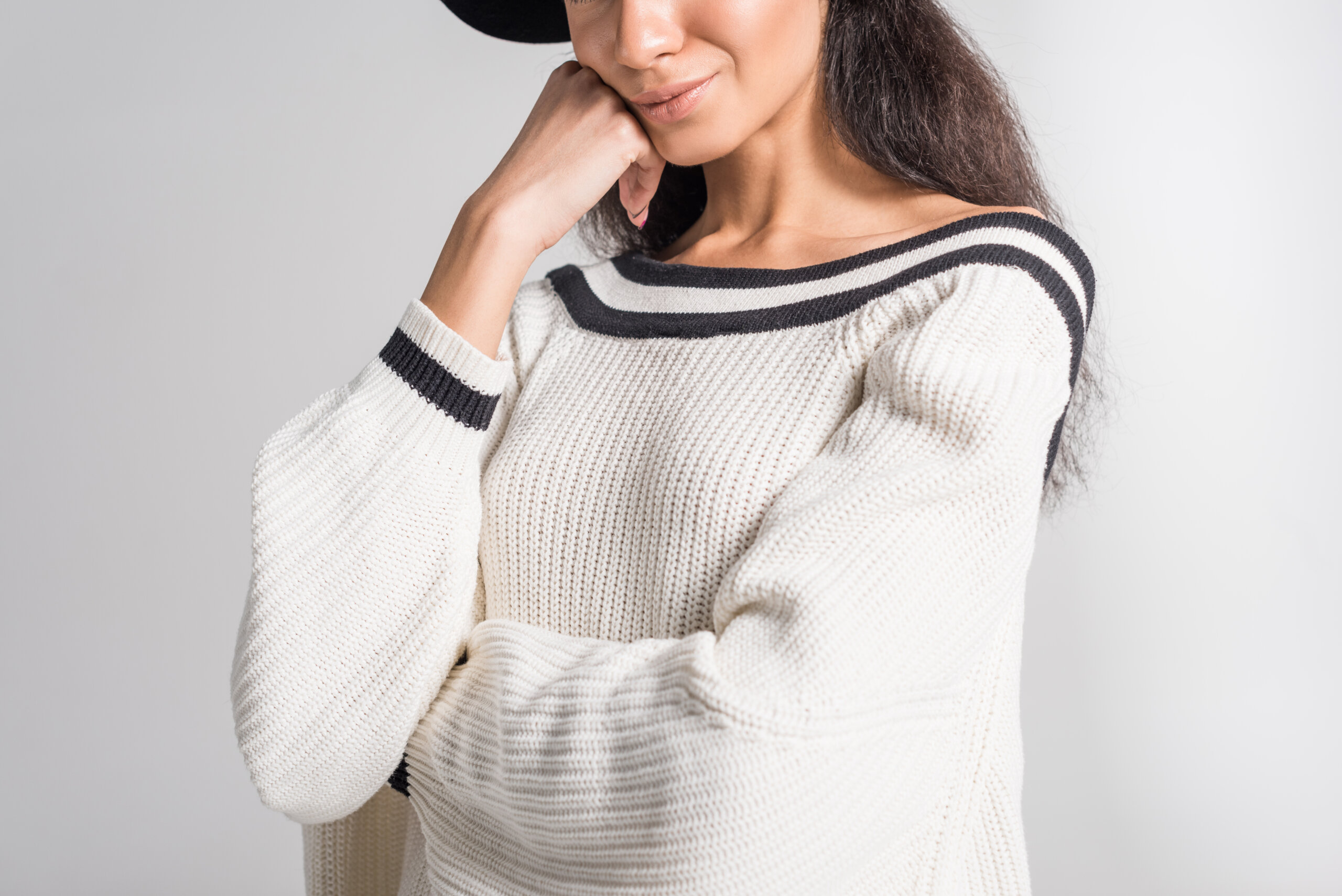
The boat neck runs horizontally across the collarbone, with a wide, shallow opening that draws attention to the shoulders and décolletage. Originally inspired by garments worn by Breton sailors (and later popularized in dance and fashion), the boat neck is innately elegant, it’s the neckline equivalent of high cheekbones. Boat neck sweaters are particularly popular among types of sweaters for ladies who want a polished, feminine silhouette without showing too much skin.
20. Scoop Neck Sweater
The scoop neck features a wide, rounded neckline that dips below the collarbone, deeper than a crew neck but not as revealing as an off-the-shoulder style. It comes in two main forms: the U-scoop, which is more casual and open, and the semi-circular version, which is more restrained. Scoop necks are a light, open feeling neckline that works well in spring-weight cotton sweaters or lighter wool blends, and they’re easy to layer a collared shirt underneath when a more formal look is needed.
21. Shawl Collar Sweater
The shawl collar is a wide, rolling lapel that wraps around the front of the sweater from the back of the neck, creating a rich, textured frame around the chest. It’s traditionally associated with types of male sweaters, particularly the classic shawl collar cardigan in thick Aran or cable knit wool, and it carries an air of sophistication and warmth. That said, the shawl collar has been embraced across all genders in modern fashion. It’s one of the most classically elegant types of collars on sweaters.
22. Polo Neck Sweater / Polo Collar
Not to be confused with the polo neck turtleneck, the polo-collared sweater features the same fold-down collar you’d find on a polo shirt, usually with a placket and one to three buttons at the neck opening. It’s a naturally collegiate, preppy aesthetic that bridges the gap between a casual sweater and a more structured polo shirt. In 2025, polo sweaters made a significant comeback as part of the broader preppy and ‘quiet luxury’ aesthetic trend, appearing in ribbed cashmere, fine wool, and soft cotton versions.
23. Off-The-Shoulder Sweater
The off-the-shoulder sweater features a wide, dramatic neckline that slips off one or both shoulders, exposing the upper arms and clavicle. It’s inherently sensual and eye-catching, with a design that peaked in the 1890s and saw major revivals in the 1970s and 1980s. Today it surfaces as a fashion-forward choice for parties, evenings out, or styled with high-waisted jeans for a vintage-inspired look.
Types of Sweaters by Knit & Texture
How a sweater is knitted defines its texture, weight, breathability, and visual character. Understanding the different types of knits for sweaters helps you choose the right garment for the right occasion and season.
24. Cable Knit Sweater
Cable knit is one of the most iconic of all types of knitted sweaters. It features interwoven, braided, or twisted stitches that create raised, rope-like ridges across the fabric. The most common cable patterns include simple braids, honeycomb grids, Saxon braids, lattice weaves, and intricate Celtic-inspired knot patterns. Cable knits are naturally thicker and more insulating than flat knits, making them ideal for cold weather. They’re visually impressive without being flashy, beautiful in their own structural way.
25. Aran / Fisherman Sweater
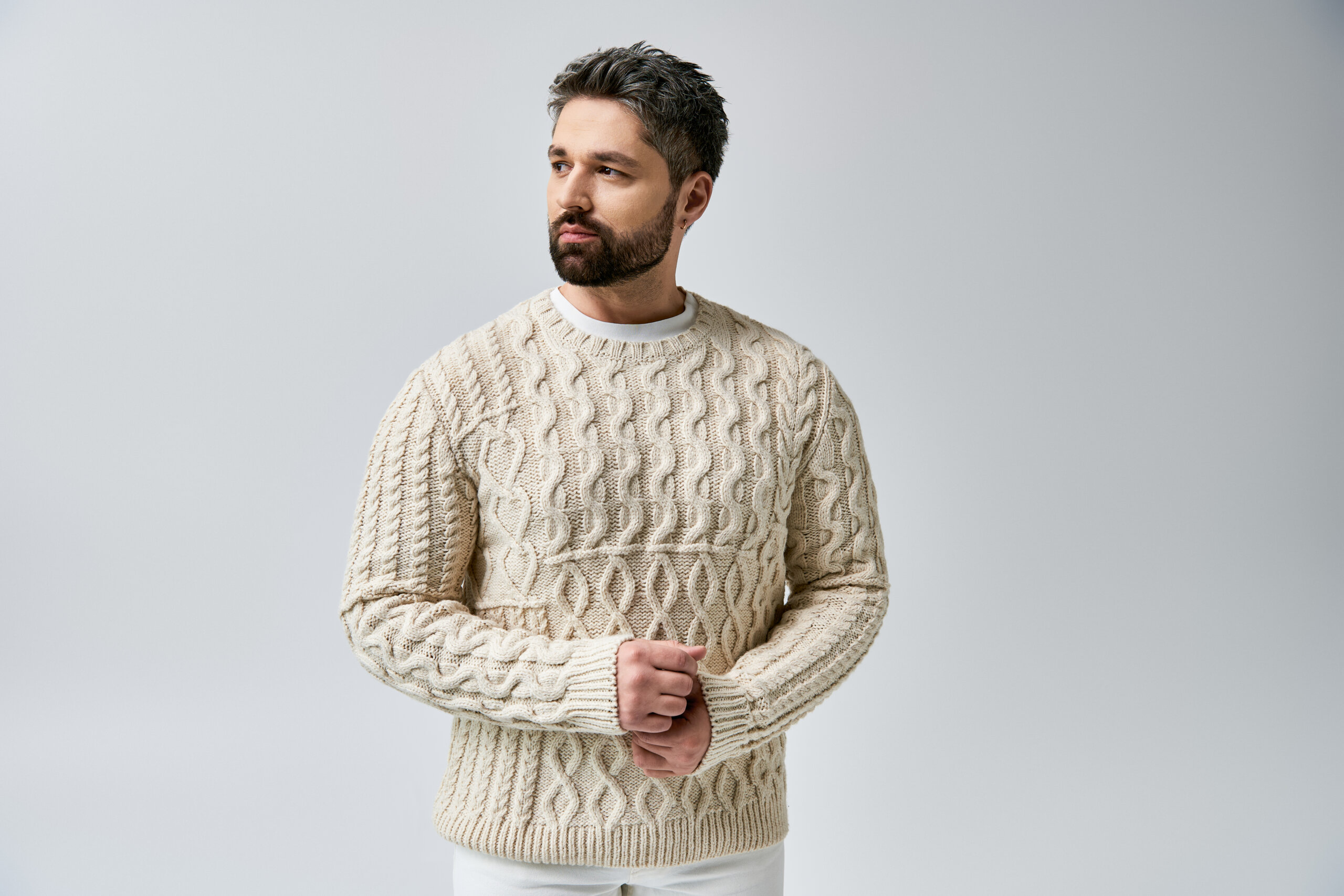
The Aran sweater, also known as the fisherman’s sweater, originated on the Aran Islands off the west coast of Ireland and is perhaps the most celebrated of all types of wool sweaters. Traditionally hand-knitted in thick, undyed cream wool, Aran sweaters feature a combination of multiple cable and textured stitch patterns on the same garment: moss stitch, honeycomb, basket weave, diamond, and more. The density of the wool and the complexity of the patterning creates a garment that is extremely warm, naturally water-resistant, and genuinely beautiful. Machine-knitted versions are more widely available, but hand-knitted Arans remain a benchmark of traditional knitwear craftsmanship.
26. Fair Isle Sweater
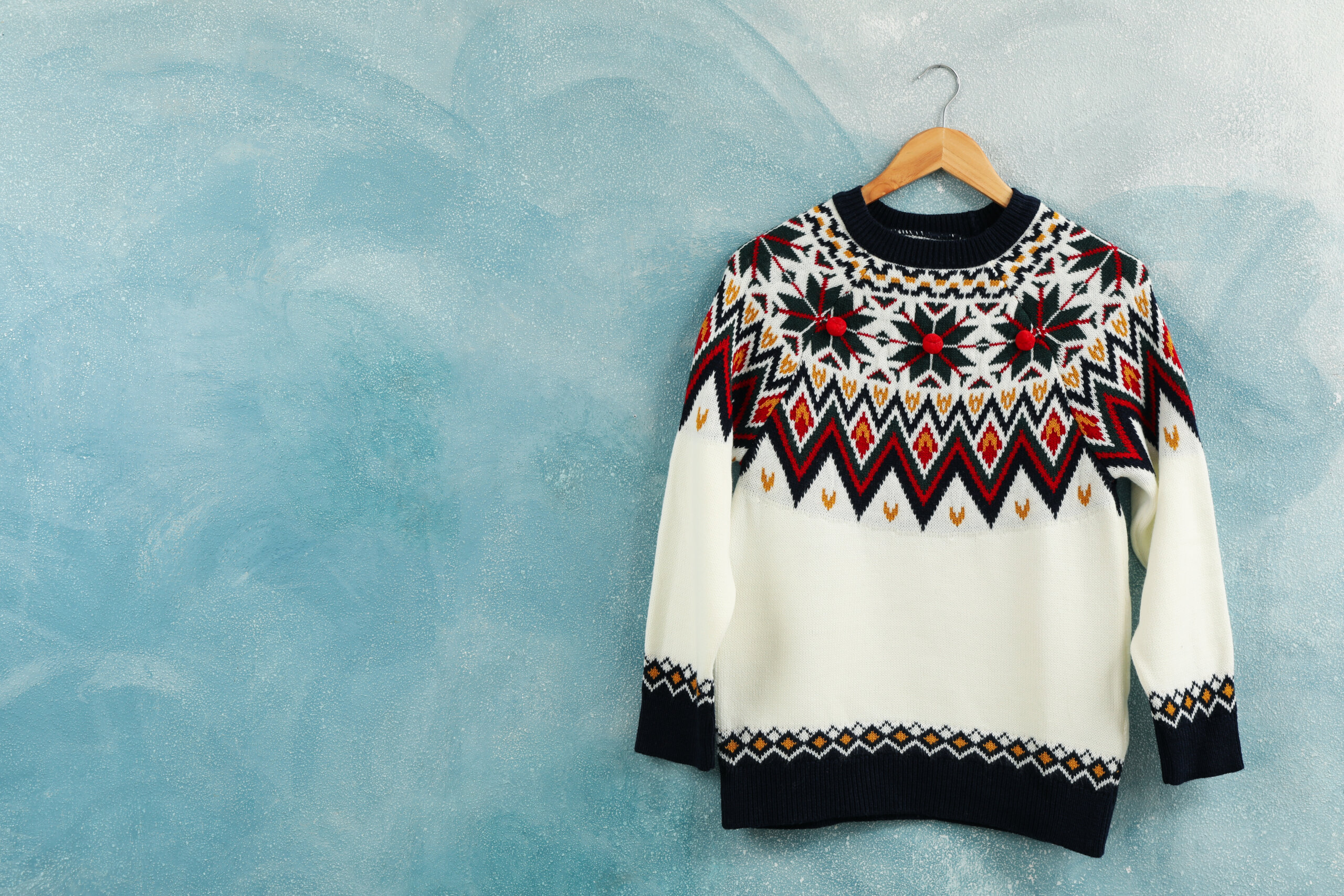
Fair Isle sweaters originate from the tiny Scottish island of Fair Isle and are instantly recognizable by their repeating geometric patterns rendered in multiple colors. Traditionally, only two colors appear in any single row, creating the characteristic layered look. Fair Isle typically features motifs of diamonds, crosses, stars, and chevrons in earthy, natural tones, though modern versions play with brighter palettes and updated pattern combinations. Fair Isle has experienced a major resurgence in 2025 and 2026, with multiple major fashion editors citing it as one of the defining sweater trends of the season, particularly in chunky knit interpretations.
27. Argyle Sweater

Argyle knitwear features the iconic interlocking diamond pattern in two or more colors, originally associated with Scottish Highland dress and the Campbell clan tartan. It became globally iconic as golf wear in the early 20th century and has since become a prep-style staple. Argyle sweaters appeared prominently on the Khaite Fall 2025 runway, signaling a full embrace of the ‘academic’ aesthetic among fashion’s avant-garde. They’re one of those patterns that feel both nostalgic and perennially fresh, hard to get wrong when the colorway is right.
28. Ribbed Sweater
Ribbed knitting creates a distinctive pattern of vertical ridges and channels by alternating knit and purl stitches. It gives the fabric a natural stretch and a structured, body-hugging quality. Ribbed sweaters are among the most consistently trendy types of knit sweaters, they have an inherent modernity to them that makes even simple designs look intentional. In 2025 and 2026, full-rib sweaters in fine gauge cotton or merino are particularly fashionable, often styled with minimal accessories to let the texture speak for itself.
29. Jacquard Sweater
Jacquard refers to patterns that are woven directly into the fabric structure, not embroidered, printed, or stamped on top of it. Jacquard knit sweaters are produced on specialized machines that can execute complex, multi-colored designs with extraordinary precision. Any yarn type and virtually any design can be rendered in jacquard, from florals to geometric abstracts to photorealistic imagery. The result is a pattern with a depth and texture that surface-level printing can’t replicate.
30. Chunky Knit Sweater
Chunky knit sweaters are constructed from thick, heavy yarn knitted on large needles, resulting in a dramatically textured, cloud-like fabric with big, exaggerated stitches. They’re excellent for extreme cold, delightfully cosy, and photographically striking. In 2025, the most stylish chunky knits feature textured stitch patterns (not just plain garter stitch), drop shoulders, and extra-long sleeves, the oversized chunky knit is perhaps the most ‘of-the-moment’ silhouette in all of knitwear right now.
31. Hand-Knit Sweater
Hand-knitted sweaters are made by individual artisans using hand-held needles, a process that is slower, more labor-intensive, and inherently variable compared to machine production. The result tends to be thicker, more textured, and more individualistic than machine-knitted alternatives. Hand-knit sweaters, particularly those from Ireland and Scotland, are treasured for their quality, uniqueness, and the tradition they represent.
More Specific Sweater Styles Worth Knowing
32. Henley Sweater
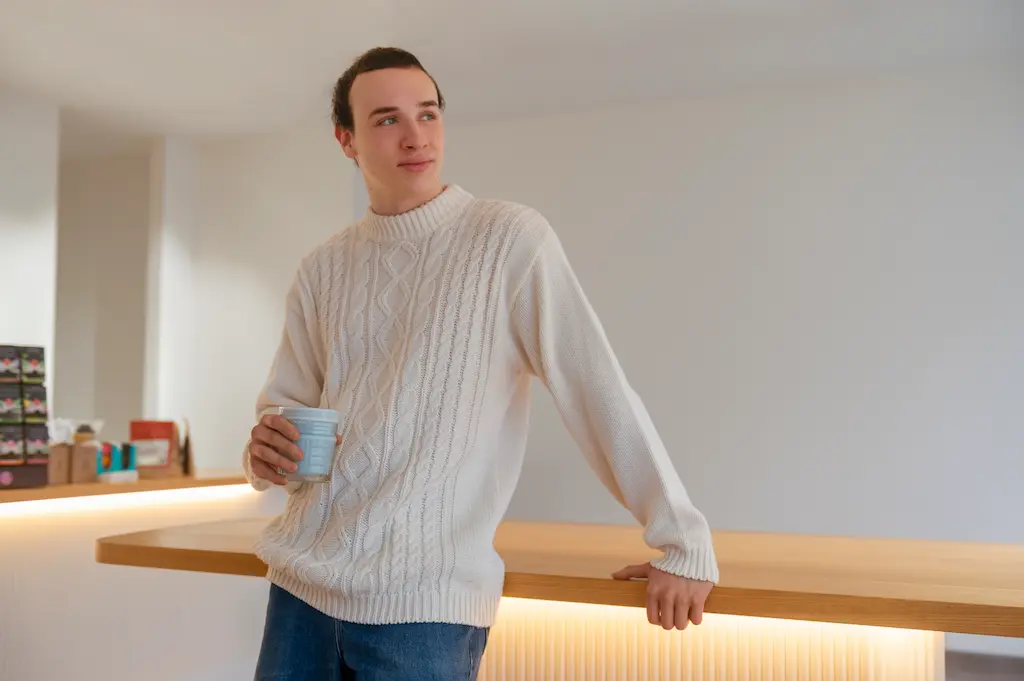
A Henley features a crew neckline combined with a short button placket that runs 3–4 inches down from the collar, the same construction as a Henley shirt. It’s a particularly common style in men’s sweaters, offering a subtle variation on the plain crew neck that adds detail without formality.
33. Quarter-Zip Sweater
The quarter-zip sweater features a zipper that runs a quarter of the way down from the collar, allowing the wearer to easily adjust ventilation and neck coverage. It’s athletic without being sporty, practical without being boring. In 2026, the quarter-zip has emerged as one of the season’s defining sweater styles, spotted on runways, on street style stars at fashion week, and styled with everything from tailored trousers to loose jeans. It’s layerable, functional, and unmistakably current.
34. Raglan Sweater
The raglan sweater features a distinctive sleeve construction where the sleeve runs in a diagonal line from the underarm all the way to the collar, without a shoulder seam. This creates a more relaxed, athletic fit across the shoulders and allows for exceptional freedom of movement. Raglan sleeves are common in athletic wear, casual sweaters, and baseball-style tops.
35. Ski Sweater
Ski sweaters are medium-weight, fitted knits designed to be worn as a mid-layer between base layers and an outer ski jacket. They’re typically constructed from wool-polyester blends for insulation and moisture management, and they come in crew, turtleneck, or shawl collar styles. Ski sweaters often feature bold colorblocks, geometric patterns, or snowflake motifs, they’re very much a performance garment that happens to look great too.
36. Running / Fitness Sweater
Running and fitness sweaters are designed for active use, with features like mesh ventilation panels, moisture-wicking fabrics, and ergonomic construction. Unlike purely decorative knits, these are engineered to regulate body temperature during exercise, warming you up quickly but preventing overheating during sustained activity.
37. Tennis Sweater
The tennis sweater has been a style icon since the 1930s. It’s typically knitted in off-white, cream, or ivory with a V-neckline accented by colored bands (usually navy and red) at the neck and cuffs, often in a cable knit pattern. It has a quintessentially preppy, collegiate aesthetic and looks great in casual or smart-casual settings.
38. Bell Sleeve Sweater
Bell sleeve sweaters feature sleeves that are fitted from the shoulder to the elbow, then flare dramatically into a wide opening at the cuff, resembling the shape of a bell. It’s a vintage-inspired design with roots in medieval European fashion, periodically resurrected as a fashion statement. Bell sleeves add drama and femininity to an otherwise simple sweater silhouette.
39. Puff Sleeve Sweater
Puff sleeve sweaters feature exaggerated, gathered sleeves that create a rounded, voluminous shape at the shoulder. The effect is both whimsical and romantic, with a strong romantic fashion undertone. These are popular female types of sweaters in transitional seasons, adding texture and visual interest above and beyond what a standard sleeve provides.
40. Distressed Sweater

Distressed sweaters are intentionally given a worn, aged, or frayed appearance, deliberately introduced holes, loose threads, or fraying edges, to create a ‘vintage’ or ‘worn-in’ aesthetic. This is a strong streetwear and fashion-forward look that has maintained consistent popularity throughout the 2010s and 2020s.
41. Cut-Out Sweater
Cut-out sweaters feature deliberate openings in the fabric, cutaways on the shoulders, chest, back, or sleeves, creating an intentionally revealing, contemporary look. They balance the warmth and coverage of a sweater with a flash of skin exposure that gives them an edgy, modern sensibility. Breathable fabrics like cotton work especially well here.
42. Grandpa Sweater

The grandpa sweater is a bulky, loose-fit cardigan with a relaxed cowl or shawl collar, typically featuring wood or horn buttons and horizontal stripe patterns in earth tones. It’s styled after the classic old-school sweaters beloved by previous generations and has become a staple of vintage-inspired and retro fashion movements.
43. Fanny Sweater
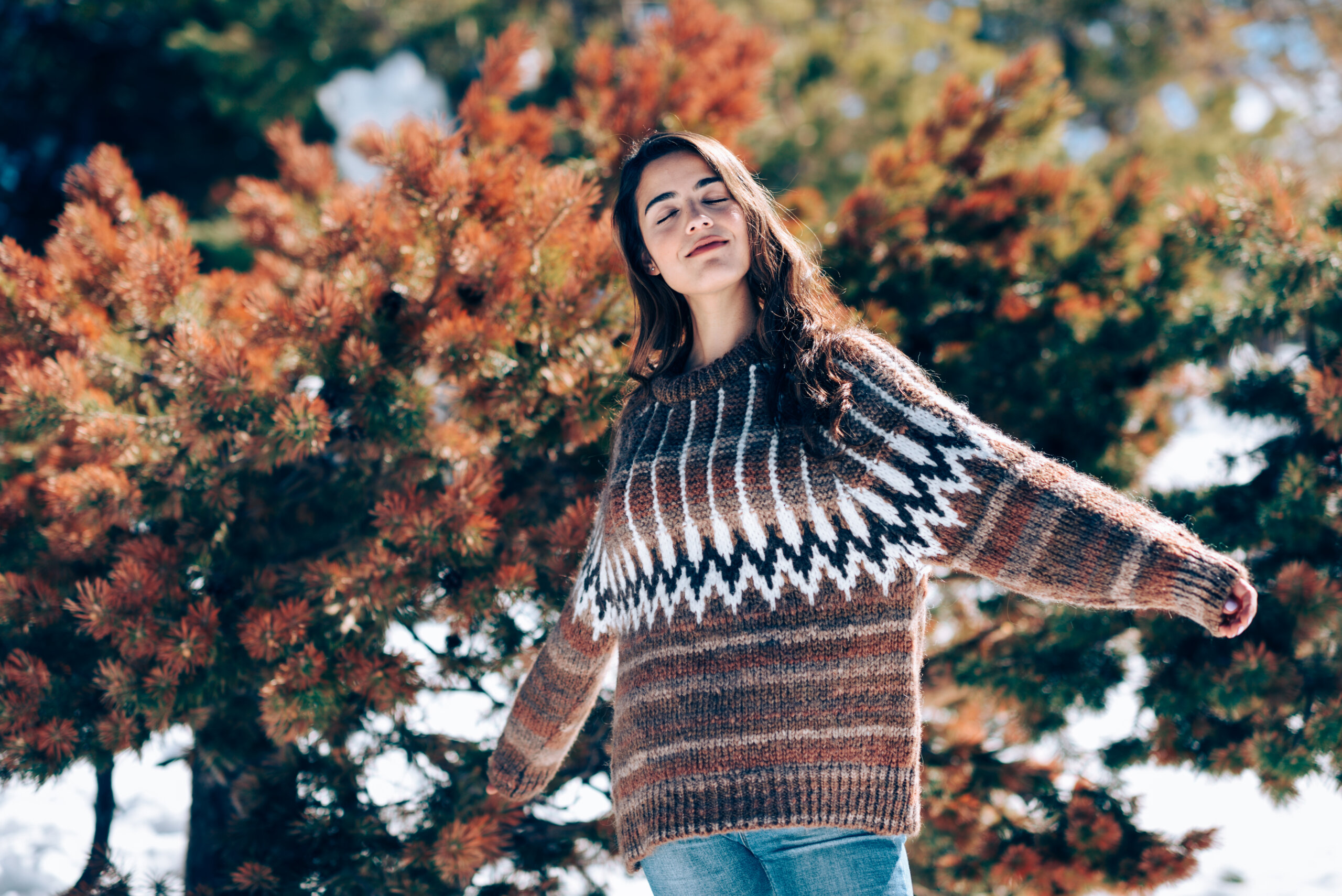
A fanny sweater is classified by its notably long hem, it extends below the hips and provides full coverage of the rear. The defining characteristic is that extended length and the coverage it offers. Often knitted in soft cashmere or wool blends, fanny sweaters prioritize comfort and a relaxed, unfussy fit.
44. Striped Sweater
Stripes are a pattern rather than a silhouette, but the striped sweater deserves its own entry because of how definitive the design is, from the classic Breton marinière, with its navy and cream horizontal stripes, to bold colorblock designs and asymmetric arrangements. Striped sweaters are a perennial staple that feel fresh every season without ever fully going out of style.
45. Ugly / Christmas Sweater
The ‘ugly sweater’, more affectionately known as the Christmas sweater, features deliberately gaudy, kitsch holiday-themed designs: reindeer, Christmas trees, snowflakes, Santa Claus, and flashing LED lights. What began as a holiday dressing joke has become a full cultural institution, with dedicated ugly sweater parties, competitive contests, and entire retail categories devoted to them every November and December.
46. Acrylic Sweater
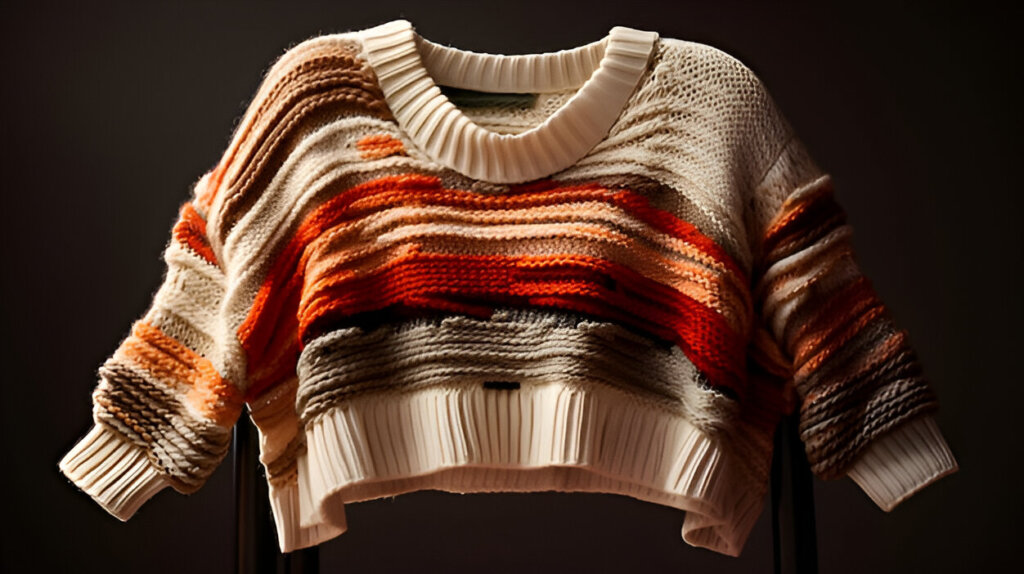
Acrylic sweaters are produced from synthetic polymer fibres and are among the most affordable options on the market, making them a popular budget alternative to wool or cashmere. High-quality, anti-pilling acrylic sweaters can be genuinely good value, lightweight, colorfast, and machine-washable. The downside of cheaper acrylic is that it pills quickly, doesn’t breathe especially well, and lacks the thermal regulation of natural fibres.
47. Cashmere Sweater
The cashmere sweater occupies the upper end of the sweater market for good reason. Cashmere fibres come from the soft undercoat of Kashmir goats raised in the extreme cold of Mongolia, China, and the Himalayas. The result is a fibre that is extraordinarily soft, lightweight, and warm, according to some estimates, up to eight times warmer than wool of equivalent weight. Cashmere also drapes beautifully, takes dye with a muted, refined elegance, and feels genuinely luxurious against the skin.
The tradeoff is price and fragility. Cashmere requires gentle care (hand washing or dry cleaning), is prone to pilling if lower quality, and represents a meaningful investment. When buying cashmere, quality matters enormously, cheap cashmere is often blended with lesser fibres and won’t have the longevity of a genuine pure cashmere piece.
48. Button-Front Cardigan
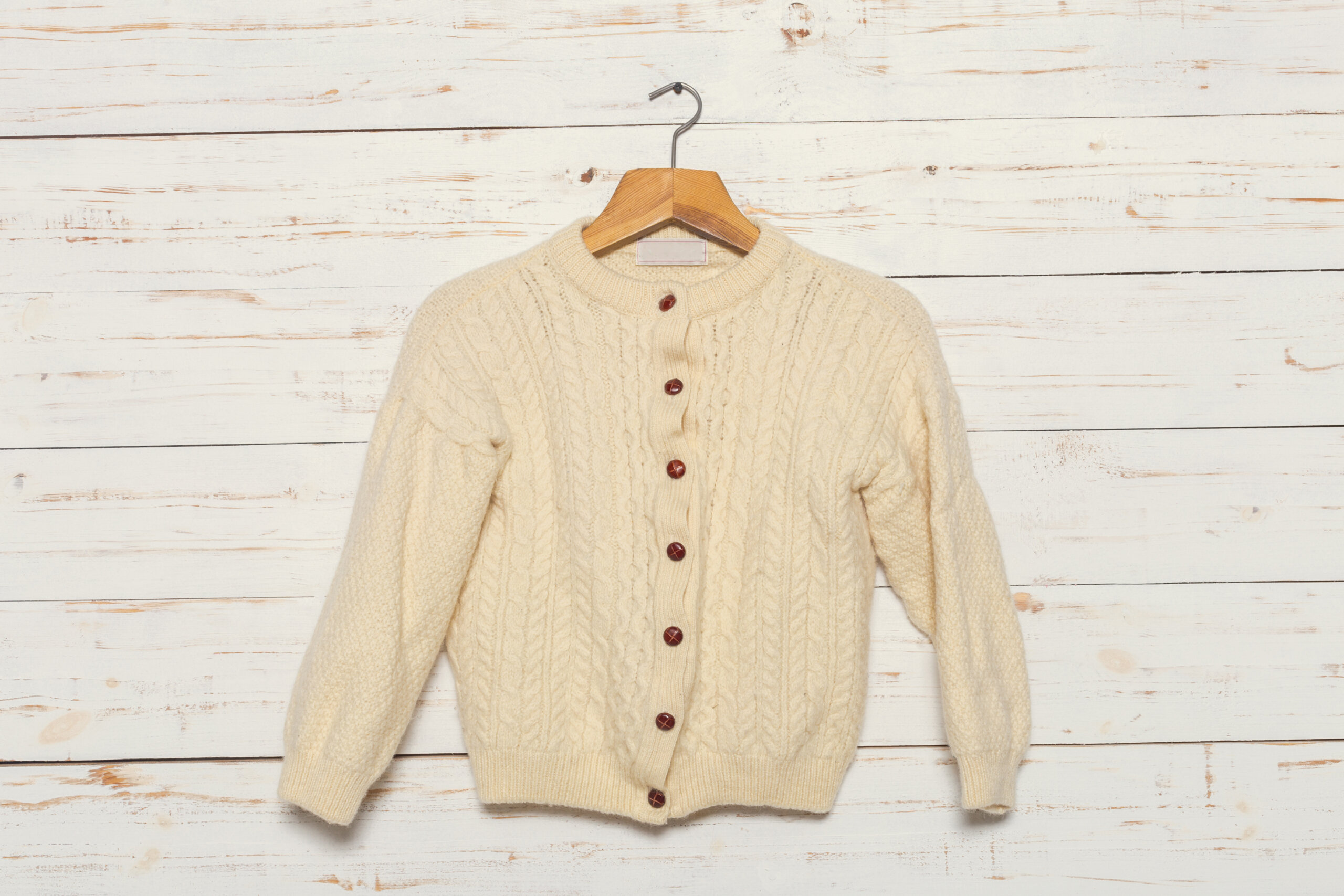
A sub-category of the classic cardigan, the button-front cardigan is defined by its full-length button placket, long sleeves, and ribbed details. It’s one of the most classic of all types of cardigan sweaters and works equally well as a professional layer, a cosy home piece, or a stylish street-level outer layer depending on the fabric and cut.
49. Open Cardigan / Waterfall Cardigan
Open cardigans, sometimes called waterfall cardigans or open-front cardigans, have no fastening at all, flowing freely open from the collarbone to the hem. They drape naturally and create a fluid, relaxed silhouette that’s ideal for layering. Because there’s no button line to worry about, they transition effortlessly between different body types and outfit styles.
50. Wrap Cardigan
The wrap cardigan features long fronts that cross over the body and tie or fasten at the waist, creating a more defined, feminine silhouette than a standard open-front cardigan. It’s one of the most flattering of all different types of cardigan sweaters for women, particularly for those who want waist definition without sacrificing the ease of knitwear.
51. Zipper-Style Sweater
Full-zip sweaters close all the way from the collar to the hem, making them the easiest sweater type to put on and take off and the most adjustable in terms of temperature regulation. They’re inherently athletic in character, great with tailored jeans or outdoor layers, but generally not suited to formal dressing.
52. Sweatshirt-Style Sweater
A sweatshirt-style sweater bridges the gap between a traditional knit sweater and a casual sweatshirt in terms of construction and look. It typically has a slightly heavier build than a standard pullover and the casual aesthetic of a sweatshirt, making it ideal for gym-adjacent or active casual lifestyles.
53. Jumper
In British English, ‘jumper’ is simply the everyday term for what Americans call a sweater, any knitted upper-body garment. In fashion contexts outside the U.S., jumpers specifically refers to casual pullovers in long or short-sleeve versions, often in cotton or cotton blends. They’re among the most versatile of all sweater types, suitable for virtually any casual or business-casual occasion.
What Are the Different Types of Sweater Fabrics?
Choosing the right types of fabric is arguably more important than choosing the right style. A beautifully designed sweater in the wrong fabric will either be uncomfortable, impractical, or short-lived. Here’s a guide to the most common sweater fabrics and how they compare:
Wool, The Enduring Standard
Wool is the original sweater fabric, and for good reason. Its fibres have a naturally crimped, wavy structure that creates microscopic air pockets within the fabric, giving it outstanding insulating properties. Wool is also naturally moisture-wicking, fire-resistant, and remarkably durable, a good wool sweater can last for decades with proper care.
Within wool, there are meaningful distinctions: Merino wool, from Merino sheep primarily in Australia and New Zealand, is the premium everyday standard, its fine fibres (typically 17–22 microns) are soft enough to wear directly against the skin without itching. Lambswool, from the first shearing of a young sheep, is particularly soft. Shetland wool is slightly coarser but extremely durable, used traditionally in Fair Isle sweaters. Aran wool is undyed, water-resistant, and extraordinarily warm, the best choice for fisherman-style outdoor knitting.
For pure cold-weather performance and durability, wool, particularly Merino, is the best fabric for sweaters. It’s the go-to choice for winter and cold-weather layering, whether you’re outdoors in a snowstorm or just navigating a drafty office.
Cashmere, Luxury at the Top End
Cashmere is a premium natural fibre sourced from the soft undercoat of Kashmir goats. It’s exceptionally soft (softer than any standard wool), exceptionally warm for its weight, and drapes with an elegance that no synthetic fibre can replicate. The finest cashmere fibres measure around 14–16 microns, far thinner than standard wool, which is what creates that silky, second-skin sensation.
The main limitations of cashmere are its price (it takes the fibres of roughly four goats to make a single sweater) and its fragility, it’s more prone to pilling than wool and requires gentler care. Wool-cashmere blends offer a practical middle ground: more affordable than pure cashmere, softer than pure wool, and often easier to maintain than either extreme. For all types of wool sweaters, cashmere remains the pinnacle of luxury.
Cotton, The Breathable Choice
Cotton sweaters are a different beast from their woollen counterparts: they’re lighter, more breathable, and much easier to care for (most are machine washable). They don’t have wool’s insulating power, cotton doesn’t trap heat as effectively and loses much of its warmth when wet, but they’re ideal for spring and autumn layering, and for people in warmer climates who still want the comfort and style of knitwear without the heat.
Cotton is also the fabric of choice for people with wool sensitivities, and it holds dye exceptionally well, resulting in vivid, long-lasting colors. Fine-gauge cotton sweaters can look remarkably refined, they’re popular in colourful V-necks, striped styles, and lightweight crewnecks for warmer seasons.
Fleece, Warmth for Active Living
Fleece is a synthetic fabric (typically polyester-based) that mimics the insulating properties of wool at a much lower cost. Fleece sweaters, including quarter-zip and full-zip fleece styles, are a staple of outdoor and athletic wardrobes. They’re machine washable, fast-drying, and highly durable. The tradeoff is that fleece doesn’t breathe as naturally as wool and can build up static, and it doesn’t look as elegant in dressier settings. Still, for casual and active use, a good fleece sweater is almost unbeatable for warmth-to-weight ratio.
Acrylic, The Budget Option
Acrylic is a synthetic fibre that’s widely used as a budget alternative to wool and cashmere. High-quality acrylic can be surprisingly soft and durable, but lower-quality versions pill quickly, don’t breathe well, and can feel plasticky. If you’re choosing an acrylic sweater, look for anti-pilling, lightweight versions, they’ll serve you better and last longer.
Alpaca, The Under-Appreciated Gem
Alpaca fibre comes from the alpaca, a South American camelid, and it’s gaining popularity as a premium alternative to cashmere. Alpaca fibres are naturally hollow, which makes them exceptionally insulating and lightweight. They’re also naturally hypoallergenic (no lanolin, unlike wool) and stronger than cashmere, making them more resistant to pilling. Baby alpaca, from the first shearing of young alpacas, is particularly soft and luxurious. If you haven’t explored alpaca sweaters, this is a fabric worth discovering.
Mohair, The Statement Texture
Mohair comes from the Angora goat and is known for its long, silky, lustrous fibres and its characteristic halo effect, the fine fibres catch light and create a cloud-like fuzziness around the garment. Mohair sweaters are dramatic, textured, and fashion-forward. On the Fall/Winter 2025–2026 runways, mohair was cited as one of the key fabric trends, described as ‘the most refined, cocooning, and silky’ choice of the season. It’s often blended with wool or acrylic for better structure.
What Kinds of Sweaters Are in Style? Trends for 2025–2026
The sweater landscape in 2025 and heading into 2026 is defined by a handful of clear aesthetic movements that span both men’s and women’s fashion:
Oversized and intentionally proportioned knits continue to dominate. The key shift is that ‘oversized’ has evolved beyond simply wearing a larger size, the most stylish versions feature drop shoulders, extra-long sleeves, and chunky textured yarns that give the volume a purposeful, sculptural quality. If you’re going oversized, the recommendation from stylists is to reach for an oversized V-neck or crew neck over a wide-cut boxy silhouette, which can be harder to style.
The turtleneck has made a decisive comeback in 2025. Major houses, Hermès, Marni, Gabriela Hearst, placed it front and center on their runways. Classic turtlenecks are being worn with cigarette jeans and oversized coats, or tucked into tailored skirts for a sleek minimalist look. Fine merino and chunky ribbed versions are both very much in play.
Fair Isle and argyle patterns are having a major moment, tapping into an après-ski and academic aesthetic that has broad cross-demographic appeal. A classic Fair Isle in a chunky knit, or an argyle in a brown and cream colorway, feels both nostalgic and current in 2025.
The quarter-zip has emerged as the definitive sweater of early 2026, athletic without being sporty, polished without feeling precious. It’s being styled with tailored trousers, loose jeans, and under oversized coats in equal measure.
Polo sweaters are back, capitalizing on the ongoing preppy and quiet luxury aesthetic. The collared knit, whether zip-neck, polo, or half-button, bridges the gap between casual and refined in a way that resonates strongly with the current mood in menswear and womenswear alike.
Texture is paramount. The advice from stylists: seek out visible stitches, mixed yarns, crochet accents, ribbing, and waffle textures. Rich, textured knits look expensive at any price point and are far more interesting than flat, plain weaves. For color, rich neutrals, burgundy, navy, chocolate brown, camel, forest green, are dominating over pastel and grey basics.
Cardigan styling has become more creative than ever. From lightweight layers tossed over a tee to chunky knits that double as a jacket, cardigans are being styled open with statement belts, layered over other sweaters, and even worn as the outermost layer in mild weather. The ‘grandpa’ cardigan aesthetic has firmly crossed over into mainstream fashion.
Different Types of Sweaters for Men and Women
Types of Sweaters for Men
Men have a particularly rich tradition of sweater dressing, and the modern men’s knitwear wardrobe is broader and more interesting than ever. The classic types of sweaters for guys include the crew neck, V-neck, and shawl collar cardigan, but the landscape also encompasses turtlenecks, quarter-zips, polo sweaters, Henley sweaters, and the full range of cable and Aran knits.
All types of sweaters for men can be broadly organized by formality: the crew neck and V-neck are the most versatile, working in both smart-casual and relaxed settings; the shawl collar or V-neck cardigan over a collared shirt reads as polished and professional; the polo sweater has a sporty, preppy quality; and the quarter-zip or full-zip works best in casual or outdoor contexts. Types of male sweaters in natural fibres, wool, merino, cashmere, consistently read as more refined than synthetic alternatives, even at similar prices.
Types of Sweaters for Women
The world of all types of sweaters for women is extraordinarily broad. Women’s sweaters span every silhouette, from body-hugging ribbed midi sweater dresses to billowing, drop-shoulder chunky knit pullovers. In practical terms, the most foundational female types of sweaters are the crewneck (the everyday workhorse), the turtleneck (the coldest-weather essential), the cardigan (the layering cornerstone), and the oversized boyfriend sweater (the casual anchor). These four styles alone can carry a complete autumn and winter wardrobe.
Beyond these, women’s sweaters extend into more fashion-forward territory: sweater vests styled over collared shirts or turtlenecks; cowl neck sweaters for elegant evenings; bell sleeve or puff sleeve designs for a romantic touch; cut-out and distressed styles for a bolder, edge-forward aesthetic; and sweater dresses for occasions that call for a more dressed-up knit option. Types of womens sweaters in the quiet luxury category, fine cashmere crewnecks, refined ribbed turtlenecks, elevated cardigans with tonal buttons, have been the dominant trend of the past several seasons and show no signs of slowing.
Quick Reference: Types of Necklines for Sweaters
To summarize the most common types of necks on sweaters and what each offers:
- Crew neck: Classic, rounded, versatile, the most universally flattering
- V-neck: Elongates the neck, allows layering with collared shirts
- Turtleneck: Maximum warmth and coverage, high-fashion appeal
- Mock neck: Turtleneck-lite, clean, modern, very current in 2025
- Roll neck: Relaxed, chunky, fisherman-adjacent
- Cowl neck: Draped, elegant, best in heavy drapey fabrics
- Funnel neck: Between crew and turtleneck, practical and modern
- Boat neck: Wide, horizontal, sophisticated and shoulder-framing
- Scoop neck: Casual, open, good for warmer seasons
- Shawl collar: Rich, rolled lapel, classic elegance
- Polo collar: Structured, preppy, a 2025 trend favourite
- Off-the-shoulder: Dramatic, revealing, fashion-forward
Cleaning and Caring for Your Sweaters
How you care for your sweaters determines how long they last. Different fabrics require different approaches, but a few universal principles apply:
For natural-fibre sweaters (wool, cashmere, alpaca), hand washing in cold water with a gentle detergent or specialist wool wash is the gold standard. Fill a basin with cold water, add a small amount of delicate-fabric detergent, and gently swirl the sweater in the liquid for 5–10 minutes without agitating or twisting. Rinse carefully in clean cold water. Press out excess moisture with a clean towel, never wring or twist. Then lay the sweater flat on a dry towel to air dry, reshaping it to its original dimensions as it dries. Never hang a wet sweater, it will stretch under its own weight.
Cashmere requires the gentlest handling of all natural fibres. A good cashmere comb or lint brush, used before washing, will remove surface pills and extend the life of the garment significantly. Store cashmere folded (not hung) with moth deterrents in sealed bags during off-seasons.
For acrylic and synthetic sweaters, most are machine washable on a cold, delicate cycle. Check the care label. Cotton sweaters can usually be machine washed cold but should be laid flat to dry to prevent shrinkage.
Regardless of the fibre, avoid drying sweaters in a tumble dryer unless the label explicitly permits it. Heat damages natural fibres and causes significant shrinkage. Ironing is rarely necessary for knitwear, a quick steam can refresh a sweater without the risk of flattening its texture.
Frequently Asked Questions
How many types of sweaters are there?
When you account for all the variations in silhouette, neckline, knit type, and intended use, there are well over 50 distinct types of sweaters. This guide covers 53 major styles, though new hybrid styles and trend-driven variations continue to emerge each season.
What is the best fabric for sweaters in cold weather?
For pure cold-weather warmth, wool, particularly merino or chunky Aran, is the best choice for everyday winter wear. It’s warm, breathable, and durable. For luxury warmth with a lighter weight, cashmere is unrivalled. For extreme cold or active outdoor use, a quality wool or wool-fleece blend delivers the best warmth-to-weight performance.
What kind of sweater is most versatile?
The crew neck pullover in a neutral color (navy, camel, grey, or off-white) in merino wool or a cotton-wool blend is arguably the single most versatile sweater you can own. It works in virtually any casual or smart-casual setting, layers cleanly under and over almost anything, and transcends trends and seasons.
Are cardigans and sweaters the same?
A cardigan is a type of sweater, specifically, an open-front sweater with a fastening (buttons, zip, or left open). All cardigans are sweaters, but not all sweaters are cardigans. The distinction is that a standard sweater (or pullover) is entirely closed, while a cardigan opens at the front.
What is the difference between a sweater and a sweatshirt?
Sweaters are knitted or crocheted from yarn, making them softer and more structured. Sweatshirts are sewn from fleece-backed woven or jersey fabric, similar to athletic wear. Sweaters span the full formality spectrum; sweatshirts lean casual and athletic.
Final Thoughts
Whether you’re building a capsule wardrobe from scratch or simply trying to understand what you already own, knowing your way around all types of sweaters is genuinely useful. Each style, neckline, and fabric serves a distinct purpose, and the right sweater, in the right context, is one of fashion’s most reliable pleasures.
The world of sweaters has never been more exciting than it is right now. From the runway-validated resurgence of the turtleneck and Fair Isle knit to the cultural phenomenon of the oversized cardigan, knitwear in 2025 and 2026 is anything but boring. Invest in well-made pieces in natural fibres, understand the difference between fabrics and necklines, and don’t be afraid to mix textures and layering styles, that’s where the real fun begins.
At Tack Apparel, we work with brands and businesses at every stage of the sweater production process, from fabric sourcing and tech packs to cut-and-sew manufacturing and private label apparel development. If you’re looking to develop your own knitwear line, we’d love to help you bring it to life.
Related : Sweater vs Sweatshirt: Decoding The Winter Champions!